
Stop arguing over one magic price: build a defensible high/low range with comps, condition notes, and a photo log your executor can follow.
Build a two-number range, not a single magic price

Whenever someone tells me, with total confidence, that an artifact is worth $12,000, my first question is: which $12,000? Auction hammer? A dealer asking price? Insurance replacement? Or the number a sibling heard from a guy at a show in 2009. Estate planning goes smoother when you stop chasing one heroic figure and instead write down a high/low range you can defend with paper. I do it like a collector who has had to sell something under time pressure: a tight list of comparable sold results, plus a short condition note that explains why our piece sits above or below those comps.
Here's the workflow that keeps it honest. Pick one lane per item: auction results (LiveAuctioneers or a house's archived catalogs), marketplace sold listings (eBay completed sales), or price guides when they exist for that niche. Don't mix asking prices with sold prices in the same sentence, because that's how families end up arguing about a number that was never real. Then set the low end from the closest comp with similar damage or missing parts, and the high end from the closest comp with cleaner condition and stronger documentation. Your job isn't to win a debate. It's to give the executor a bracket that survives the first phone call with an appraiser or auction specialist.
Make the range visible in the inventory: for example, "$2,400 to $3,100 (based on 6 sold comps, last checked May 2026)." Add one line about what moves it: "Hairline crack at rim; no excavation record; label in old ink present." That note is gold later because it tells your heirs why you didn't use the prettiest screenshot on the internet. And if you're thinking, I don't want to leave them homework, this is the opposite. A range plus a reason saves your family from the worst trap in this category: one person clinging to a single number like it's a birthright.
Condition notes your executor can understand in 60 seconds
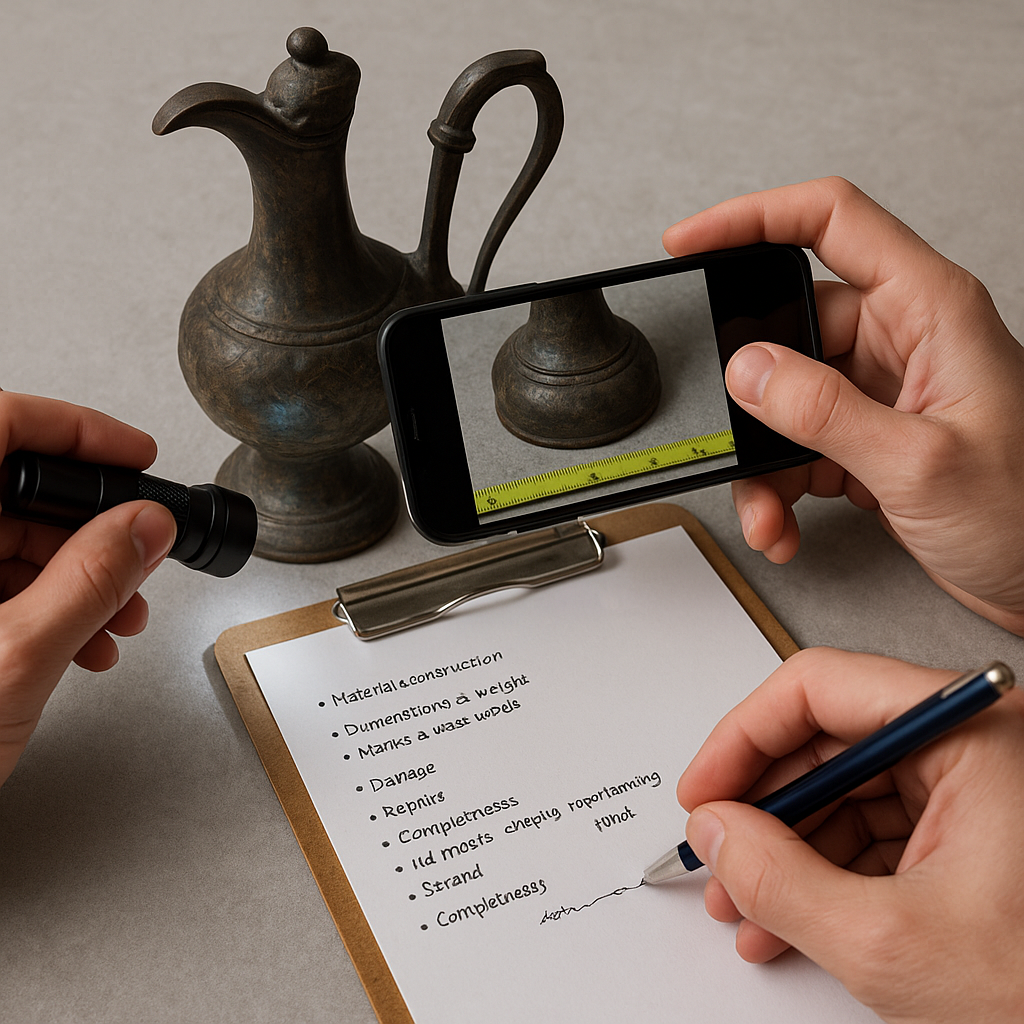
I've seen families inherit a drawer of "cool old stuff" where every item has a story but none of it has a usable condition description. The problem is not sentimental. It's practical: the first serious buyer asks for photos of the base, the maker's mark, the join, the repair, the edge wear, and suddenly your executor is guessing what to look for. So I write condition notes like I'm handing the piece to a specialist who has five minutes before the next call.
Keep it brutally simple and specific. I use a 6-part checklist and I force myself to keep each line short:
- Material & construction: bronze, iron, bone, paper, textile; cast vs forged; hand-stitched vs machine; rivets present.
- Dimensions & weight: measured with a tape and a kitchen scale, not eyeballed. Buyers will ask.
- Marks & labels: stamp, signature, inventory tag, old collection label. Note where it is and photograph it straight-on and raking light.
- Damage: chips, cracks, warping, corrosion, insect holes, flaking, delamination. If it's stable, say so. If it sheds, say that too.
- Repairs: glued breaks, overpainting, replaced fittings, modern screws, re-backed paper. If you don't know, write "possible later repair at X" and show a photo.
- Completeness: lid present, sheath missing, stand included, companion pieces separated.
The hands-on part: take the photos while you write the notes. Put the item on a neutral surface, then shoot a ruler in-frame for one photo so scale can't be argued later. Use your phone's flashlight at a shallow angle to reveal hairline cracks and surface repairs. This doesn't prove authenticity, and it doesn't prove the absence of problems, but it does capture what your heir will need to disclose. Also, don't clean aggressively right before photos. I've watched someone turn a harmless dark patina into bright rubbed metal with a paper towel, then wonder why the quotes came in low.
When estate planning turns into estate administration, the executor needs to move fast without being sloppy. A one-page condition snapshot per artifact is the difference between "we think it's fine" and a set of notes that lets an appraiser quote with confidence, or an auction house say yes without five rounds of emails.
The provenance stack: three documents that calm everybody down
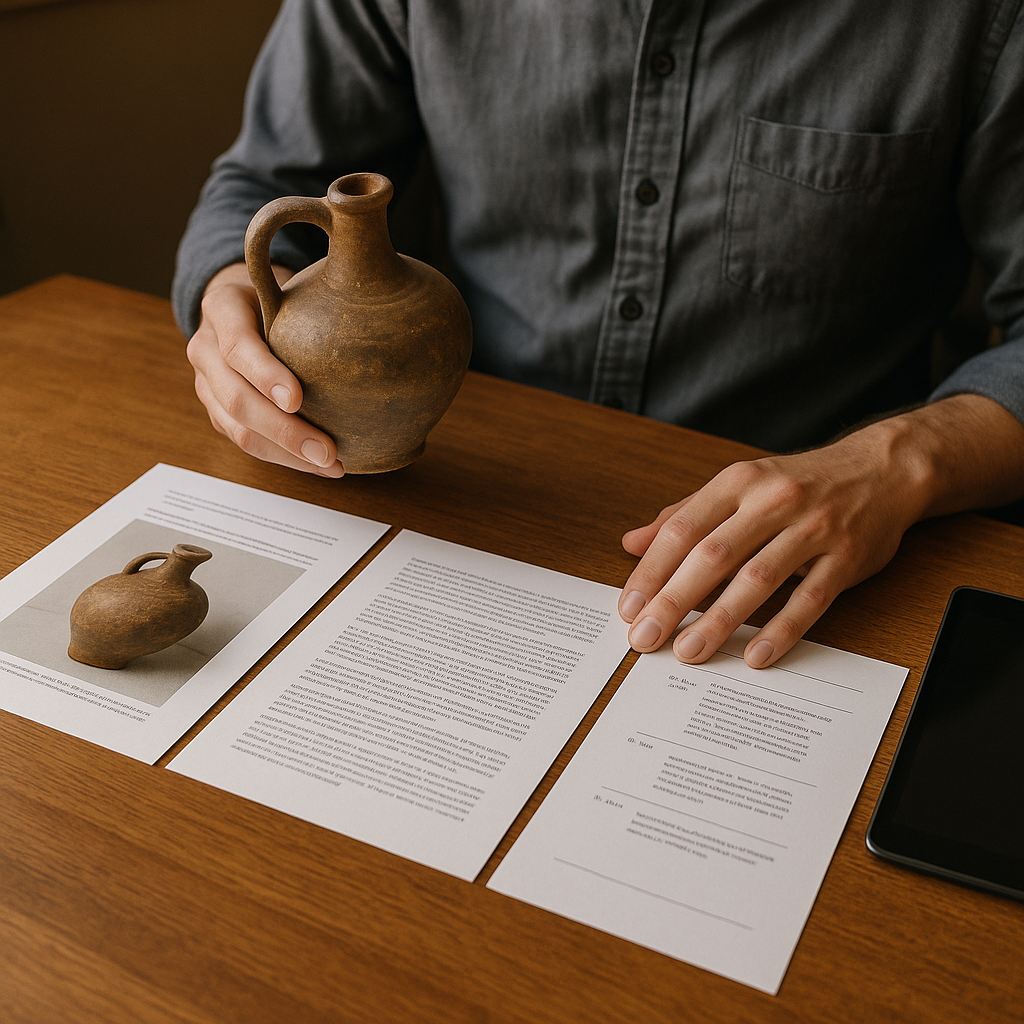
If you collect rare artifacts long enough, you learn the uncomfortable truth: the thing that feels most convincing to you (the origin story) is often the least useful to the person inheriting it. Executors don't need a saga. They need a small, boring stack of documents that travels with the object and answers the first three questions any buyer asks: what is it, where did it come from, and why should I trust that answer.
I like a three-document standard. Not because it's magical, but because it's achievable for normal households, and it forces you to pick the strongest proof instead of hoarding every scrap of paper.
- Acquisition record: invoice, auction lot page, or bill of sale. If you bought it privately, write a dated memo to file with names, price paid, and any stated claims (what the seller said it was). Attach screenshots if it was an online sale, but keep the original file, not just a printout.
- Attribution support: an old catalog description, an expert email, a prior appraisal, or a published reference that matches distinctive features. This is where I include close-up photos of maker's marks, inscriptions, tooling patterns, or weave structure that tie to that reference.
- Chain-of-custody notes: a simple timeline. "Purchased from X in 2016; displayed in office until 2022; stored in archival box thereafter." If it changed hands in the family, write that down too. Families forget, then argue.
Two practical things I've learned the hard way. First, keep duplicates: one printed packet in a labeled sleeve, plus a digital folder (PDFs and the original photos) that your executor can access without guessing passwords. Second, don't overclaim. If you don't have excavation paperwork, export permits, or a clear chain going back far enough to satisfy a picky buyer, don't try to write your way around it. Just document what you do know and let the value range reflect the uncertainty.
This is the part that turns a collection into a manageable inheritance. Not because it makes everything worth more, but because it makes the numbers legible. When heirs can see the acquisition record, the attribution support, and the custody timeline in one place, they're less likely to treat the value as a referendum on your judgment. It becomes paperwork, which is exactly what you want when emotions are already running hot.