
Rare books, historic documents, antique maps, and other heritage objects can appeal to leaders and collectors for reasons that go beyond their financial value. Their value lies in the history behind them, the provenance that establishes their origin, and the sense of authority or distinction that comes with owning something tied to another era. Here's why these pieces continue to appeal to people who already have plenty of ways to signal success.
Heritage Objects Can Signal Status and Authority

For some collectors, the appeal of rare heritage holdings goes beyond resale value. The history attached to an object can also give it personal and social significance. Owning an object with a documented history can also give it a sense of permanence and distinction. In career terms, it does what a long bio tries to do, but faster.
The trick is that it has to look like you live with it, not like you bought it for a photo. A framed document hung too high in a home office seems like a set piece. If you want a low-drama entry point, a signed or numbered first edition connected to your field can be a meaningful place to start, provided its authenticity and provenance are well documented. It can be visible on a shelf during Zoom calls, sure, but it also comes off the shelf when you're drafting a talk, mentoring a direct report, or trying to remember how someone else solved the same problem 30 years ago. It is both a prop and a tool, and people can sense the difference in about ten seconds.
Provenance Matters When Collecting Heritage Objects
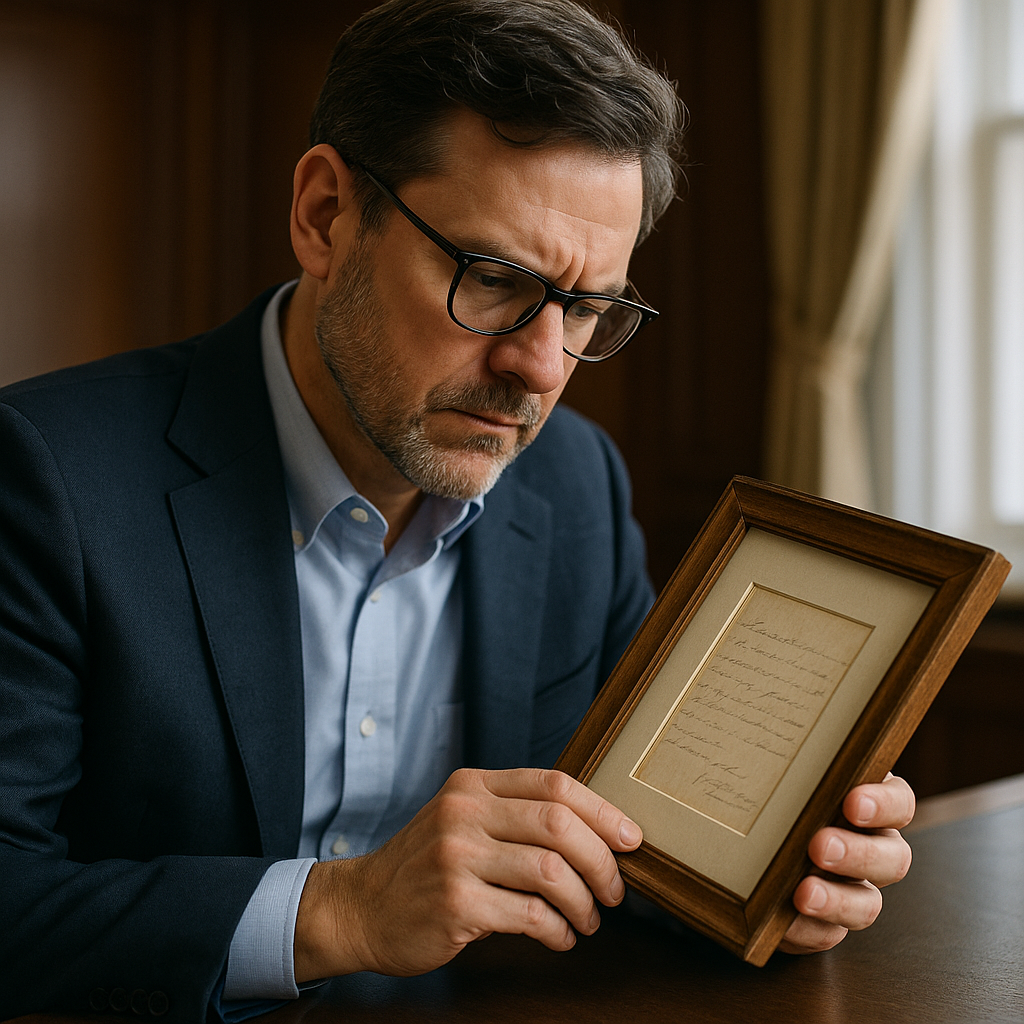
If you're wondering why serious collectors care so much about documentation, it's because provenance can help establish an object's history, authenticity, and ownership. Auction catalogs, condition reports, and provenance records can help establish what an object is, where it came from, and its condition. That maps cleanly onto career power. It says you're patient, you do diligence, and you can manage risk without acting scared of it.
If you're considering your own purchase, research the object's provenance and documentation before you buy. Look for a reputable seller who will provide a clear description, photos of relevant marks or signatures, and a return policy that isn't written like a trap. If it's an auction, read the condition notes, not just the glossy headline copy. And keep your own file. I literally label a folder with the item name, date acquired, seller, and any supporting docs, because at some point you'll move offices, redo insurance, or pass it to your kids, and you don't want the story to be lost in between.
The appeal comes from knowing exactly what an artifact is, where it came from, and why its history matters.
Leaders Display Heritage Objects Without Overdoing It

The fastest way to ruin the effect is to treat your artifact like a fun fact. I've watched leaders derail a meeting because they couldn't resist the little show-and-tell moment. Everyone smiles, then everyone's mentally gone. The item has a job in the ritual of leadership.
I like a simple rule: if the object can't plausibly show up during a normal week of your professional life, it will read like costume jewelry for your reputation. The leaders who pull this off keep the artifact close to their craft. A founder with an early product prototype on a shelf is unbeatable because the story is embodied. A lawyer with a well-kept set of old court reports, tabbed and used, feels different from a lawyer with a random antique gavel.
Also, protect your credibility by setting boundaries. If someone asks what it cost, you can answer without making it weird: "I bought it because of the history, not as an investment," then move on. If someone asks about authenticity and you can't explain it, don't bluff. Say you're still learning and point to the documentation you have.