
Square footage, exclusive use, and a single forgotten receipt file can determine whether your home office write-off holds up.
Why a dedicated room can make the rules easier to follow
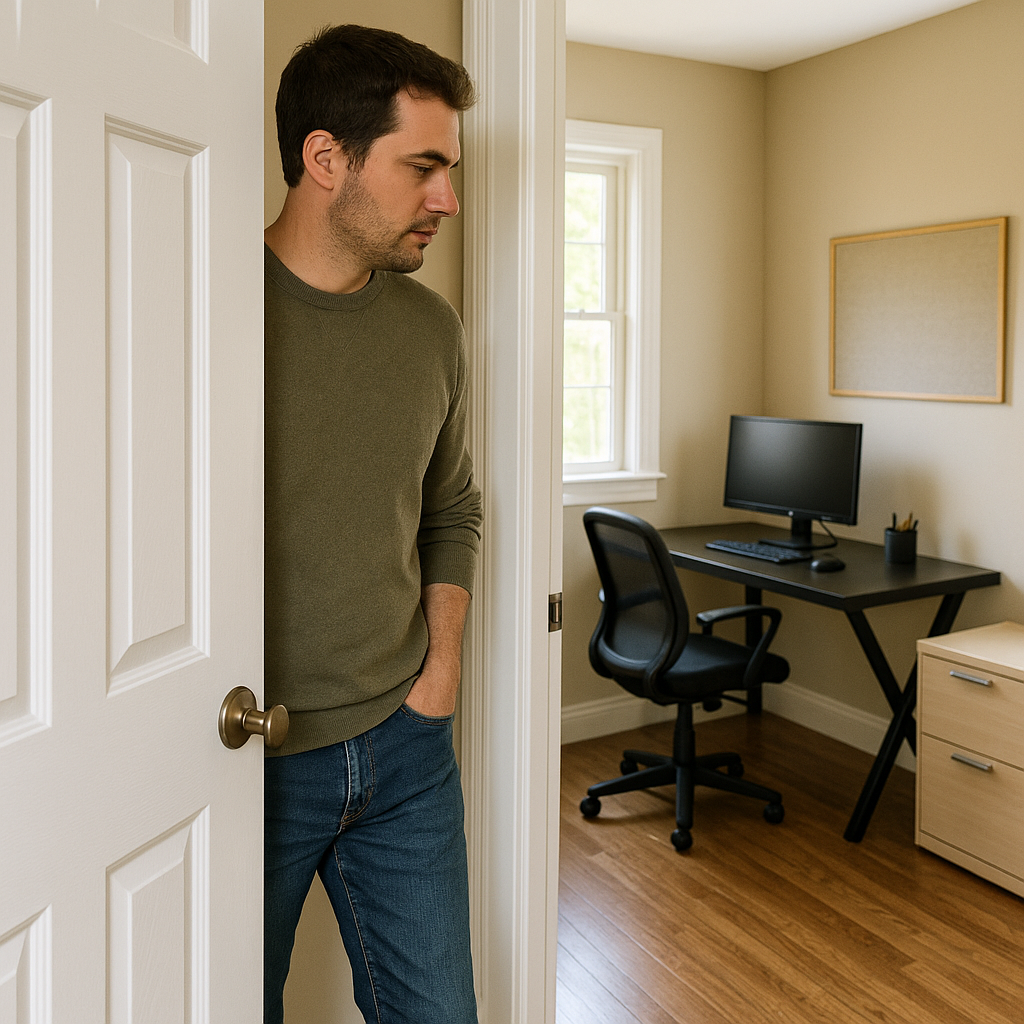
When I started house hunting with self-employment in the mix, I stopped looking at kitchens first. I went straight to the spot where I could close a door on my workday. Not because the IRS requires a door, but because a clearly separated workspace can make it easier for me to keep the area exclusively and regularly devoted to business.
In practice, I run a quick mental checklist on tours. Can I point to one specific room and say, with a straight face, that it gets used only for work? Does it have a door that makes the boundary obvious? Is there a closet in there that will tempt me to toss in the vacuum, gift wrap, or the winter boots the second I move in? (Closets are where good intentions go to die.)
For eligible self-employed buyers, a qualifying workspace may support a home-office deduction, although employees generally cannot claim the federal deduction simply because they work from home. But the workspace generally has to meet the IRS's exclusive- and regular-use requirements. Using the same workspace for personal activities can generally violate the exclusive-use requirement, so a guest bed or a shared craft area may pose a problem. If you're shopping with this in mind, you want a room that doesn't have an obvious second job. An awkward den off the hallway beats a gorgeous loft that opens right into the living room, because open lofts basically beg to become household overflow.
One more thing I do before I get too excited: I ask myself if I could photograph the room on move-in day, and it would still look like an office. Desk, chair, monitor, maybe a filing cabinet. No yoga mat leaning in the corner. No dresser. If the only way the room works is by breaking the exclusive-use rule, it isn't the income-potential feature I thought it was.
Square footage you can defend without getting cute
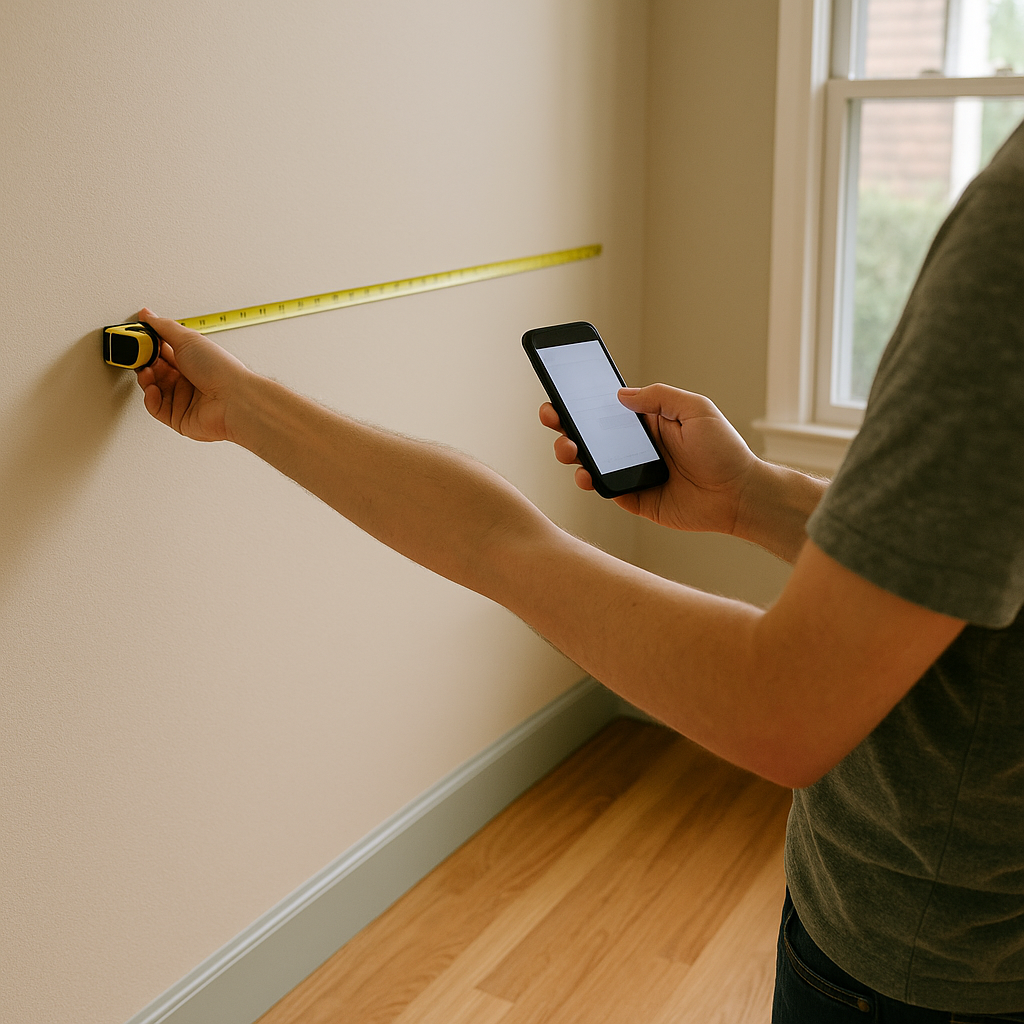
I learned the hard way that the fastest way to hate tax season is to be vague about your office size. You don't need to turn into a surveyor, but you do need a number you can defend without hand-waving. The minute you're estimating from memory, you start rounding up in your head, and then you're building the whole deduction on vibes. Not great.
Here's what I do the week I move in (or the weekend I finally commit to a dedicated room). I grab a tape measure and write down the length and width in a notes app. If it's a weird shape, I break it into rectangles and add them. Then I take two quick photos: one of the measurement on the tape against a wall, and one wide shot that shows the room layout. It's not because a photo is magic evidence, it's because Future Me forgets everything, and Past Me is unreliable. The photos stop me from re-litigating the square footage every April.
When you're buying a home specifically because it can support home-based work, this matters on the front end, too. A tiny room can still qualify, but the smaller it is, the more precise you need to be. A 7-by-9 room is different from an 8-by-10 room, and you feel it when you're calculating a percentage of your home's total square footage. And yes, you'll want your home's total square footage from a reliable source, like your closing documents or property records, so you're not mixing one estimate with another.
Also, resist the temptation to carve out a cute slice of an open living area with a rug and call it your office. Aside from the exclusive-use problem, open areas are hard to measure cleanly because you're inevitably defining imaginary borders. If you want to do it, at least make the borders obvious with furniture placement and measure the exact footprint, not the whole room, because your desk happens to be in it.
If you use the simplified method for the deduction, you still want your measurements because it keeps you honest about the workspace size. If you use the regular method, you'll be glad you did this once instead of trying to reconstruct it while staring at a floor plan thumbnail on a listing site.
The receipt pile nobody budgets for
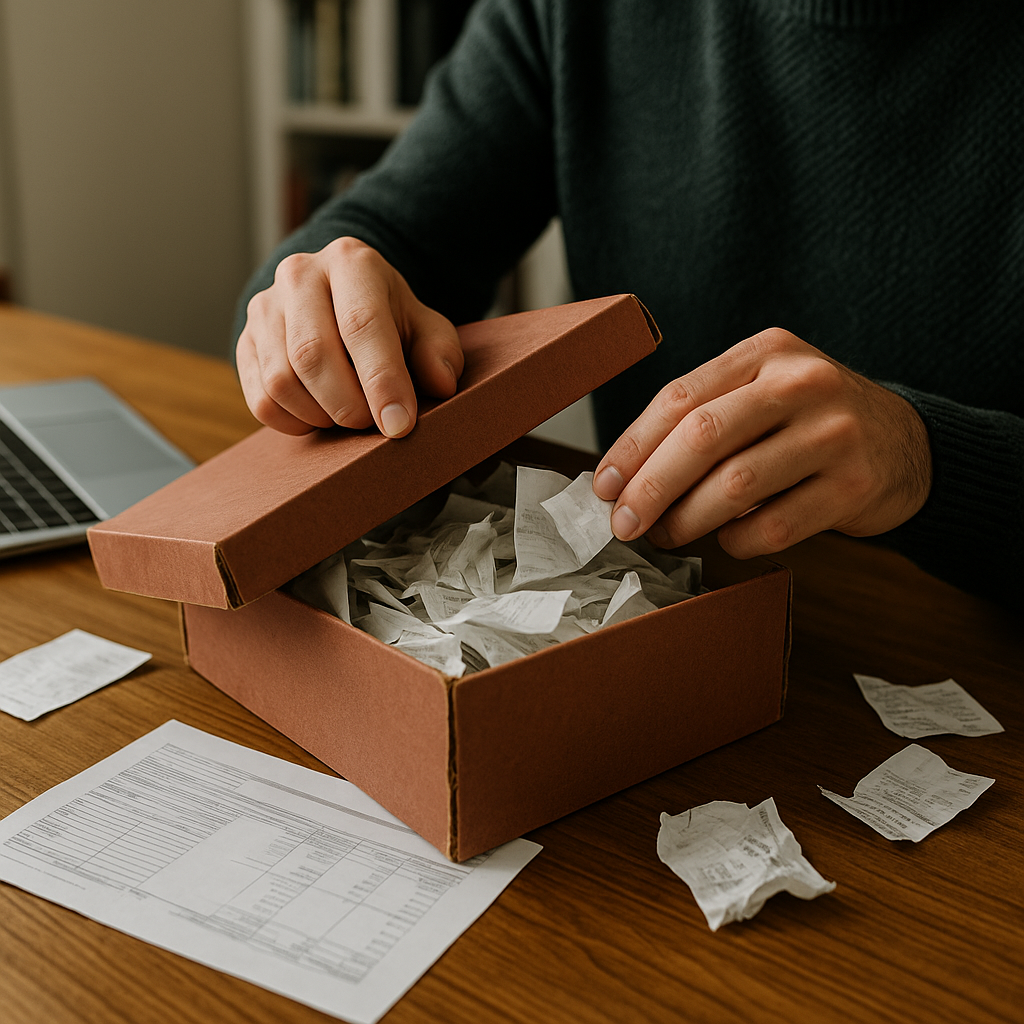
The surprise cost of a home office isn't the desk. It's the admin mess you inherit when part of your home becomes a qualifying business workspace. When I first claimed a home office deduction, I had the classic problem: I could tell you exactly why the expense was legitimate, but I couldn't put my hands on the documentation without a scavenger hunt through email, bank statements, and a literal shoebox.
So now, when I'm evaluating a home with this kind of income potential, I look for a spot for the boring systems, not just the pretty Zoom background. Specifically: where will the receipt file live, and will it stay in the office so the exclusive-use story doesn't get muddy? A shallow closet in the office is perfect for this if you keep it business-only. I use a simple accordion file with labeled tabs (Utilities, Internet, Repairs, Insurance, Supplies). Next to it, I keep a small envelope for the stuff that's easy to lose: the $12 USB-C adapter from the airport kiosk, the printer ink receipt, the shipping label roll. Those are the items you swear you'll remember, and you won't.
Owning the home adds another layer, as you may incur office-related expenses that are part house and part business. Repairs are where people get sloppy. If the HVAC tech is out and you pay for a service call, that invoice matters. If you repaint the dedicated office, that receipt matters. If you buy a new ceiling light for that room because the builder installed a single sad boob light in 2004, save the receipt and take a photo of the before-and-after, not for drama, for clarity.
I also keep one running spreadsheet tab called Home Office Notes with dates and a plain-English line about what happened. Not a novel. Just enough that when I'm staring at a charge nine months later, I don't confuse the contractor's invoice for the time I fixed the back fence. The people who get the most out of this deduction are not the ones with the fanciest setups. They're the ones who can quickly answer a basic question: what this expense is and why it belongs to the workspace.