
Three maintenance costs owners don't brag about: routine service, pressure tests, and the bracelet stretch you can feel in the clasp.
Service intervals depend on the watch and how you wear it
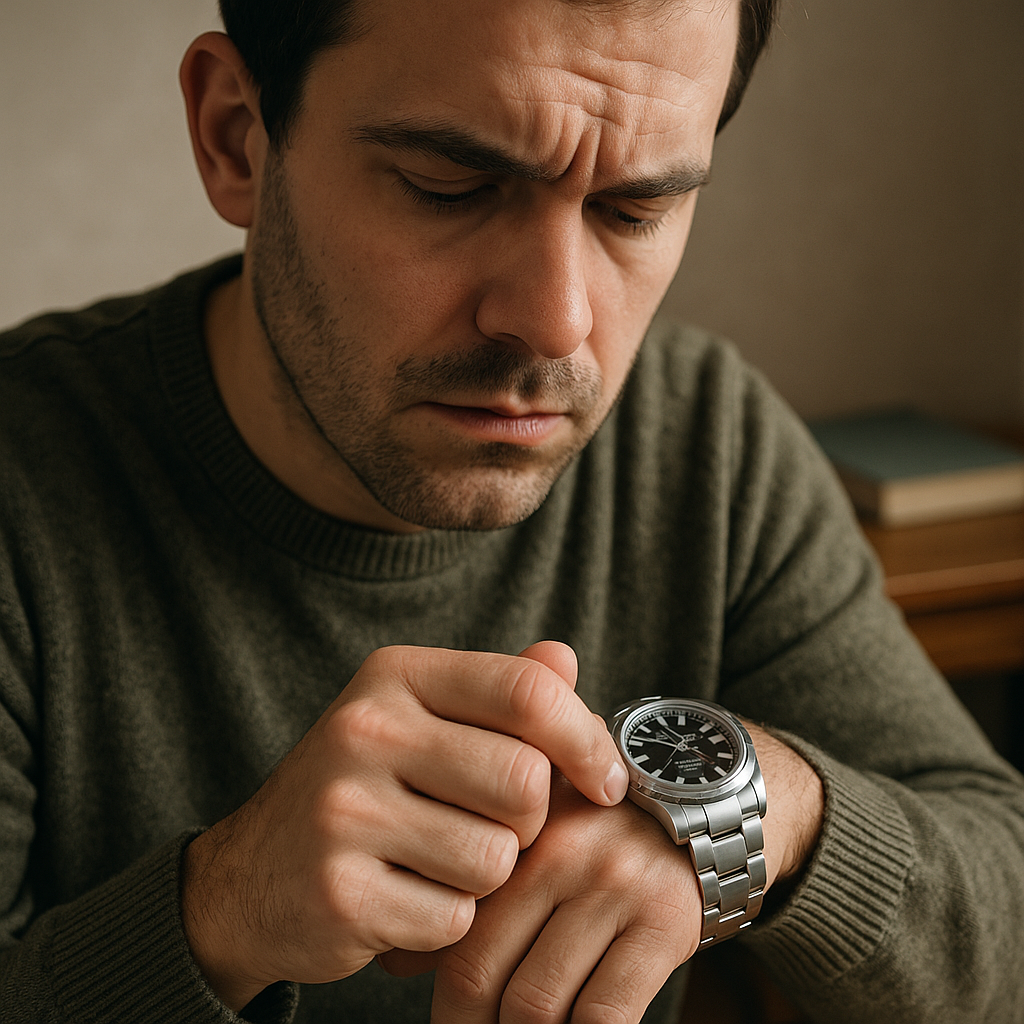
People buy the watch and mentally file it under done. Then the first little behavior change shows up: it used to hold time like a metronome, and now it drifts. Or the winding feels different, like the crown has grit in the threads. If you own a modern mechanical piece from Rolex, Omega, Cartier, Tudor, IWC, or basically anyone with a serious service network, you are going to have to play their long game. It isn't dramatic. It's just a calendar you can ignore for a while, right up until you can't.
Here's how it tends to go in real life. In the first few years, many modern mechanical watches may need little beyond routine care, though actual service needs depend on the model and how it is worn. Service timing varies considerably by brand, model, and use. Omega gives a general range of 5 to 8 years, while Rolex recommends approximately 10 years for many watches. Other brands focus more on changes in accuracy or function, so the owner's manual and manufacturer guidance matter more than a single age-based rule.
The cost isn't only the service itself. It's the logistics and the opportunity cost. You ship or hand it over, you insure it, and then you live without it for weeks, sometimes longer if parts are backordered. And if it's a complicated piece (chronograph, GMT with a jumping hour, annual calendar), the bill is rarely the entry-level number you saw in a 2016 forum thread. If you want to keep the resale story clean, you also want the paperwork: service receipt, serial matching, and the brand's record. That's not romance. That's the maintenance tax of wearing something that signals you have the margin to keep it running.
Water resistance fades quietly, then gets expensive fast
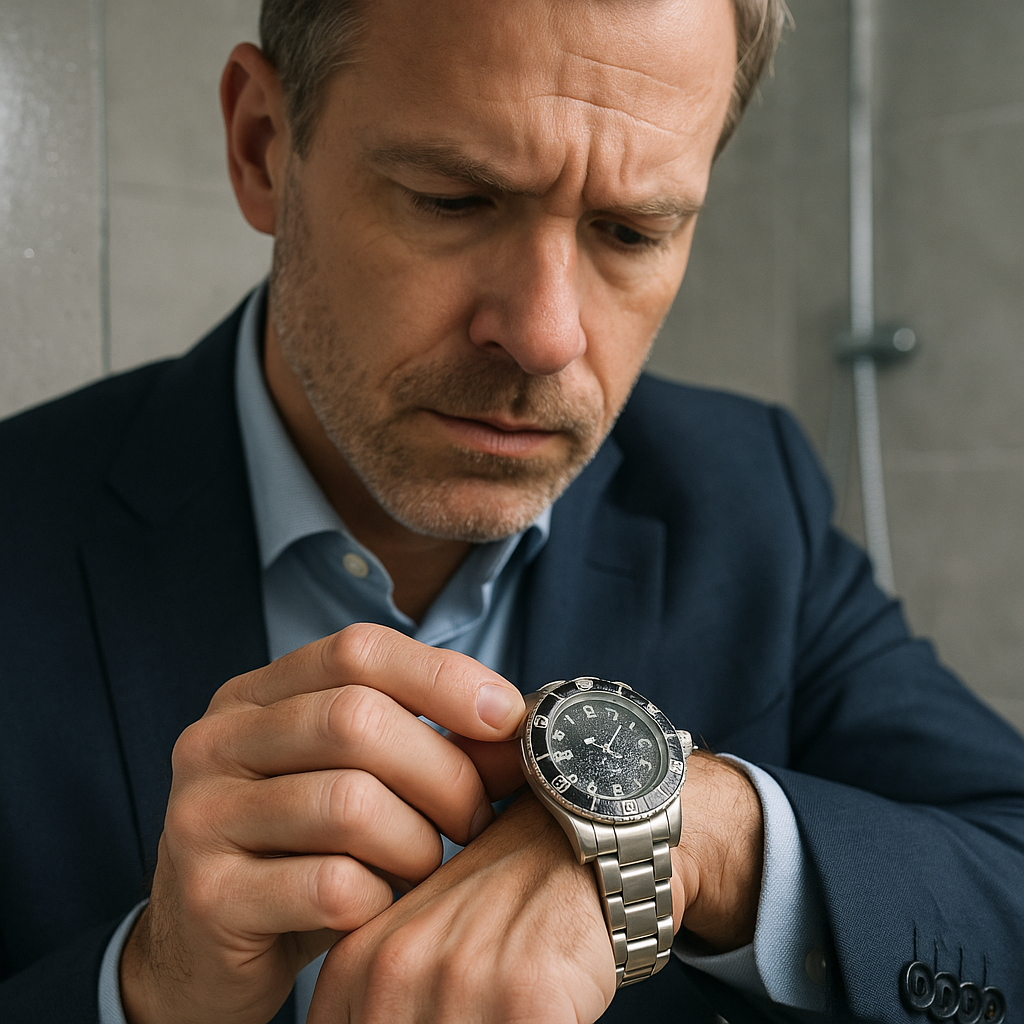
I've watched more than one otherwise sharp executive talk themselves into a false sense of security with two words: "screw-down." The crown feels tight, the case says 100 m, and the watch looks like it could survive a yacht deck and a board meeting without changing straps. The problem is that water resistance is not a personality trait. It's a set of rubber gaskets and seals that age like everything else.
You don't need a dramatic dunk to get burned here. Water resistance can decline as gaskets age or after the crown or case takes a knock, and manufacturers may also warn against extreme temperature changes. Over time, gaskets compress, lubricants dry out, and tiny tolerances stop being your friend. The watch can look pristine and still be one bad moment away from moisture. If condensation shows up under the crystal, you're already late. At that point, you're not buying a simple check; you're paying for triage: disassembly, drying, potentially a new dial or hands if there's corrosion, and a full service because everything had to come apart anyway.
The quiet cost is the routine water-resistance testing, which is worth considering if you regularly wear the watch in water. A qualified service center can test water resistance, and the recommended frequency and cost vary by manufacturer and watch. If you regularly use the watch for swimming or diving, regular water-resistance checks become more important. You don't want a friendly "looks fine" inspection. You want a pressure test, and you want it documented, especially if you travel and end up in hotel pools and ocean swims where the temptation is high and the consequences are dumb.
Some owners go years without a water-resistance problem, but that does not mean the seals are still performing as intended. A moisture-damaged dial can turn a neglected water-resistance check into a much more expensive repair.
Bracelet wear: the cost you feel in the clasp
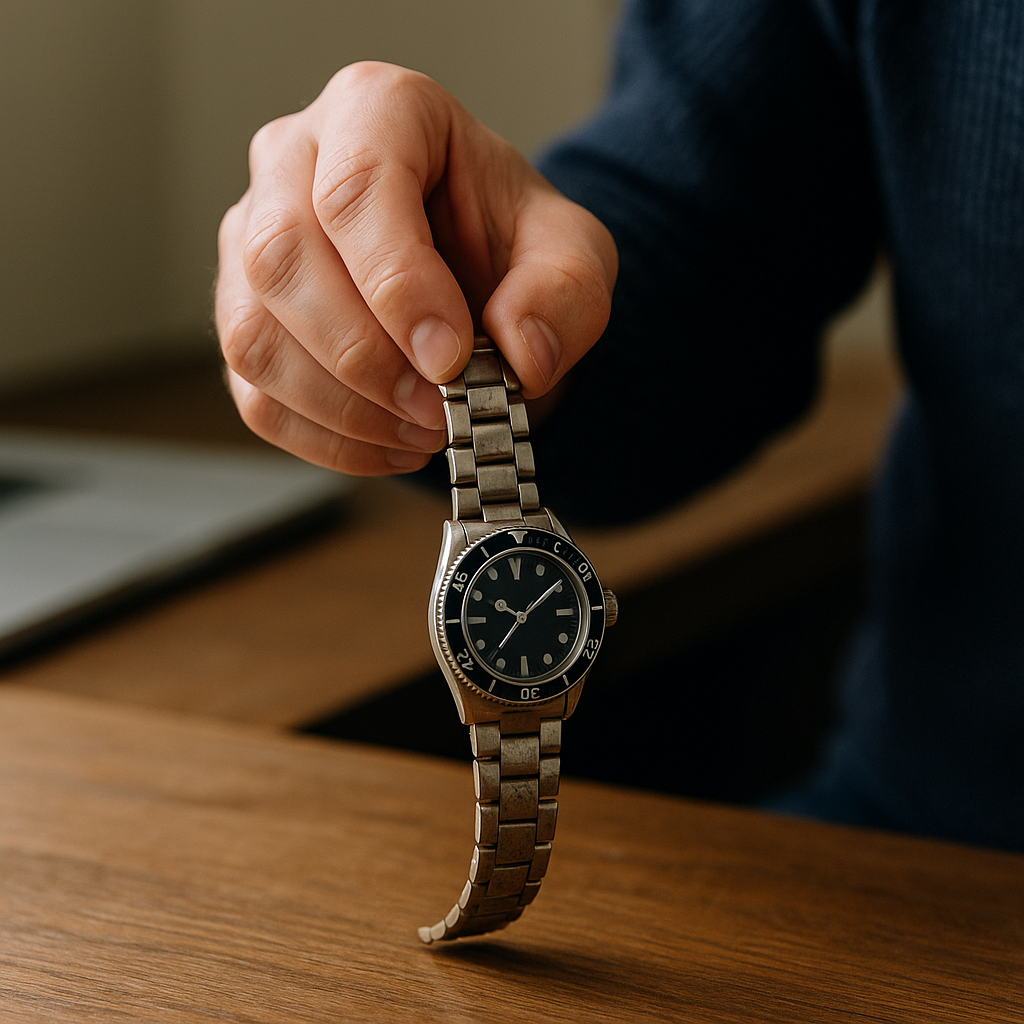
Movement service gets all the attention because it feels technical. Bracelet wear is the one that sneaks up on you because it feels like normal aging, right up until your watch starts sitting weird on your wrist and the clasp no longer closes with that crisp click. On a daily-worn Rolex Oyster bracelet, an Omega Seamaster bracelet, or anything with solid links and tight tolerances, dirt plus skin oils basically turn the bracelet into a slow-motion sanding system. Not dramatic. Just constant.
Bracelet wear can show up as increased play between the links, visible droop, or a looser feel than when the bracelet was new. If you hold the watch head and let the bracelet hang, you can sometimes see the links droop in a way they didn't when it was new. People call it stretch, but it's wear at the pins and link holes. You can't polish that out. Polishing the outside just removes metal, making the problem worse while making the watch look shiny enough to distract you from it.
This is where the maintenance tab gets annoying. For routine bracelet cleaning, follow the manufacturer's instructions. Rolex recommends soapy water and a soft brush for suitable metal bracelets, while Omega gives similar guidance for waterproof cases and metal bracelets. But if the bracelet is already worn, the real fix is parts: new pins, new sleeves, sometimes replacement links, and in the worst cases, a full bracelet replacement that costs enough to make you consider a strap life for a while.
Also, the polishing-cloth habit. I get why people do it. Fingerprints bug you. For routine cleaning, I stick to a clean microfiber cloth rather than trying to polish scratches myself; Rolex, for example, recommends leaving professional case and bracelet polishing to its service centers. For watches that the manufacturer says can be cleaned this way, I rinse the metal bracelet with lukewarm water, use mild soap and a soft brush, then dry it with a clean microfiber cloth.