
Three networking moves that turn loose connections into crisp intros, warm pilots, and clean closes.
Write the Two-Line Intro Your Connector Can Forward
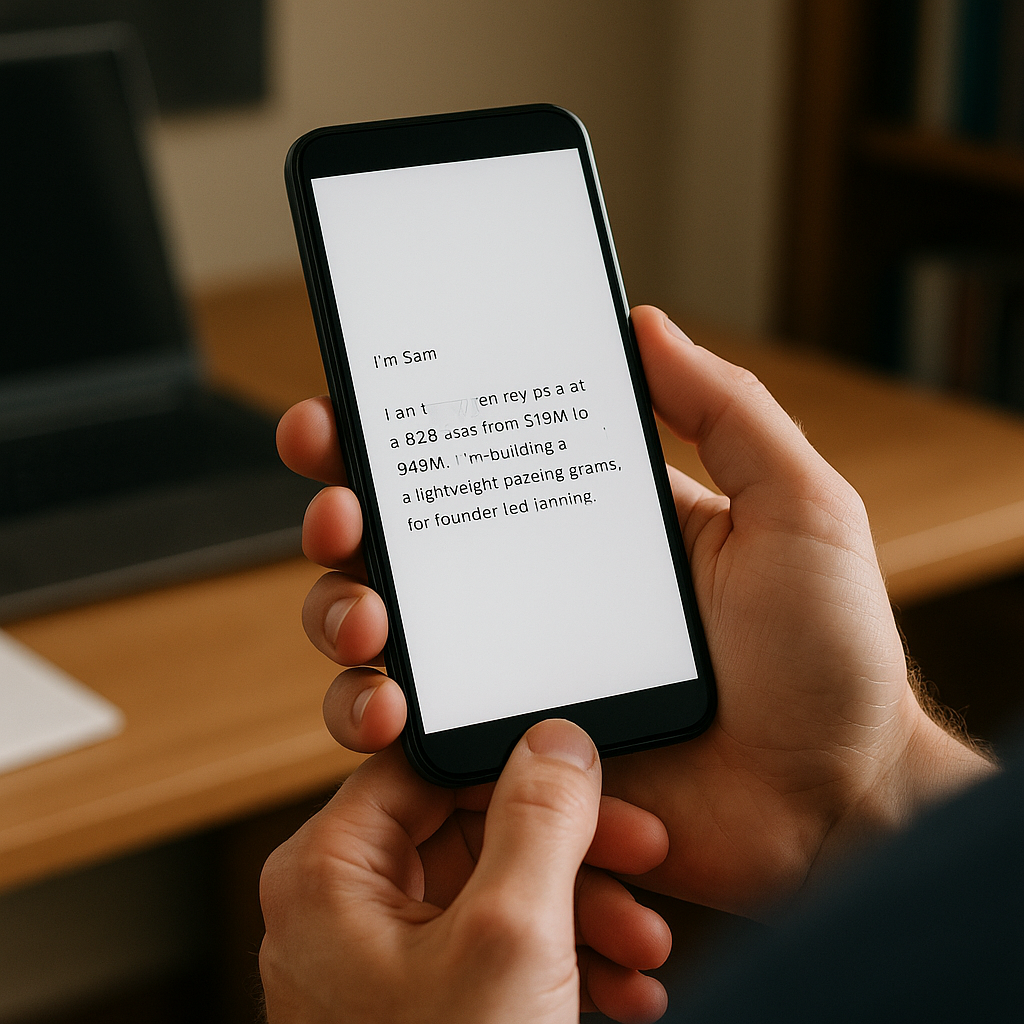
Most side-venture networking dies in the connector's inbox because your ask is a paragraph. A busy connector is more likely to forward an introduction when it's short, clear, and easy to send without rewriting. So I keep a two-line intro template that fits on a phone screen and doesn't force someone to rewrite it at 11:47 p.m.
Here's the version I use: Line 1: who you are plus the tiny credential that matters to this person. Line 2: what you're building plus the narrow reason you're reaching out. That's it. Your connector isn't your PR team. They're putting their own relationship on the line when they make the introduction.
Example I used recently for a side advisory product: "I'm Sam, I ran rev ops at a B2B SaaS from $12M to $45M. I'm building a lightweight pricing audit for founder-led teams, and I'd love 15 minutes with Jordan to sanity-check my packaging for agencies." Notice what's missing: a pitch deck, a list of features, and the phrase "pick your brain." Also, notice the connector can forward it unchanged, which is the whole point.
If you're thinking, "But I do three things," that's a signal to pick one lane for the intro. You can always expand later on the call. The forwardable note is just the starting point. If you want to make it even easier, add a single optional third sentence your connector can delete: "If it's not a fit, no worries, I'd still value a name of one person you trust on X." That sentence stays optional because it gives them an exit without making the entire message feel like a chain letter.
One practical detail: include your availability in plain English. "I'm free Tue 8:30-10:00 a.m. ET and Thu after 3 p.m." beats a naked Calendly link when you're asking for a favor. It reads like you understand how executives protect their time.
Turn One Event Into Five Follow-Ups Without Being Weird

Conferences and mixers are loud, expensive, and full of conversations that feel productive until you get home and realize you have zero next steps. The fix isn't to collect more business cards. It's to leave each conversation with one specific detail you can reference in your follow-up.
When I'm working a room for a side venture, I do one thing on purpose: I listen for the operating detail. That detail gives you a clear reason to write later that doesn't sound like a generic "great to meet you."
I keep my follow-up to a small number of messages, each with a different purpose:
- Message 1 (same day): one sentence that proves you were there for the actual conversation. "You were right about usage-based pricing being a sales enablement problem."
- Message 2 (48 hours): a single helpful thing. One podcast episode, one screenshot, one template link, one intro offer.
- Message 3 (one week): the micro-ask tied to your side venture. "Would you be open to a 12-minute call so I can pressure-test X?" If they say no, you still look normal because it's bounded.
- Message 4 (two weeks): a progress ping. "Quick update: I shipped the first version, and I'm now looking for two pilots in [narrow segment]."
- Message 5 (one month): a polite close that keeps the door open. "If now isn't the moment, I'll stop nudging. If you know someone who owns [exact problem], I'd love a name."
The point is to give each follow-up a specific reason for being there, rather than sending generic check-ins. Also, don't pretend you ran into someone if you didn't. If you met for 90 seconds at a sponsor table while both of you were trying to find the coffee, say that. Honesty reads calmer than forced intimacy, and calm is surprisingly persuasive when you're trying to get a side project taken seriously.
Offer a Pilot That Feels Safe to Say Yes To
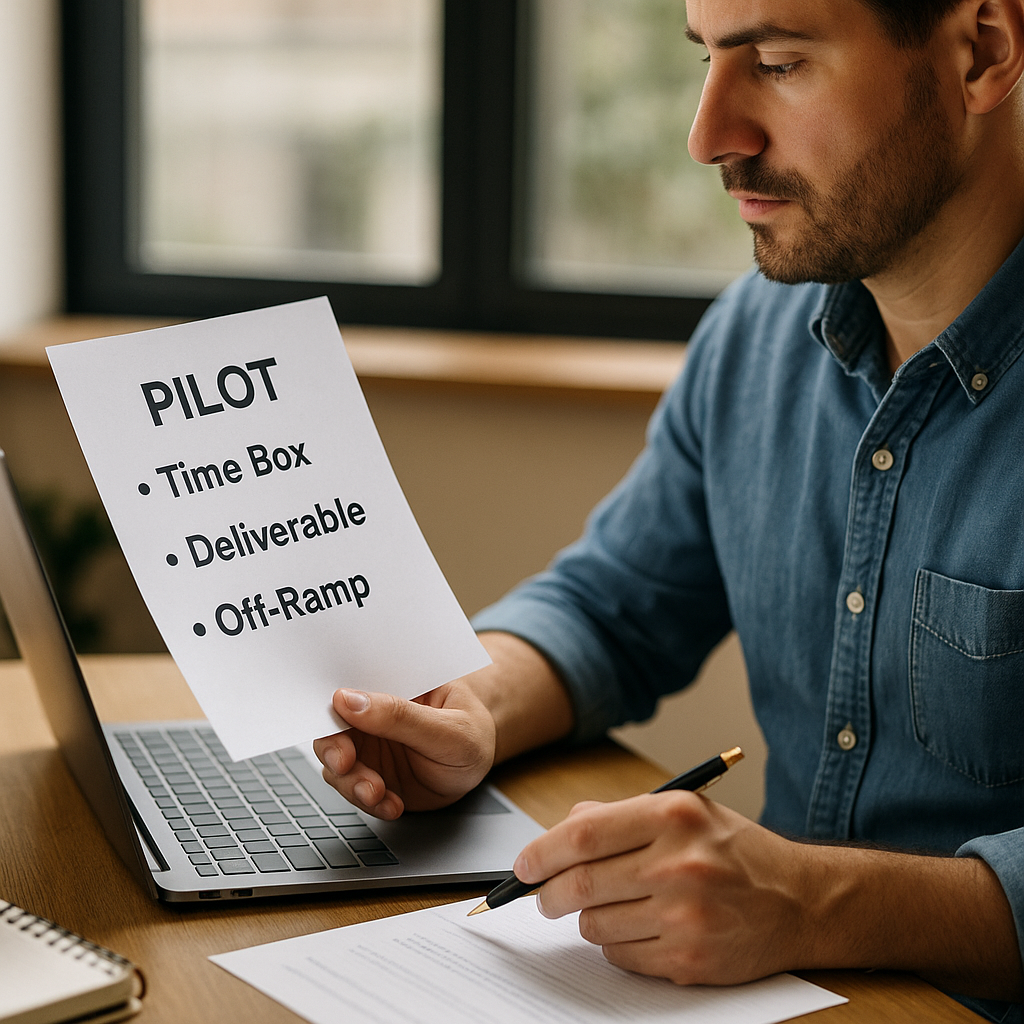
If your side venture requires a leap of faith, your network will smile, say interesting, and disappear. People who run teams often have good reason to be cautious about open-ended commitments. So instead of asking for feedback or support, I make the first ask a pilot that has three guardrails: a time box, a defined deliverable, and a clean off-ramp.
A time box means you give an exact calendar promise. Something like: "Two 30-minute calls over 10 days." Deliverables mean they can picture what lands in their inbox. A one-page teardown, a recorded Loom walkthrough, a before-and-after document, or a set of three options with tradeoffs. Off-ramp means you say out loud how this ends if it's not valuable: "If you don't see value, we stop." That makes the commitment easier to evaluate."
Here's a pilot offer I used for a side pricing project, sent to a VP I'd met once through a mutual: "If you're open to it, I'd like to run a small packaging review as a pilot: you send your current pricing page and your top 10 deal objections, we do one 30-minute intake, and I send back a one-page set of packaging options with the pros and cons. If it doesn't help, we call it, and I won't bug you about it again."
The networking benefit is straightforward: a pilot gives your connector a specific way to describe what you're asking for. It's easier for someone to introduce you when they can say, "They're doing a two-call pilot and deliver a one-page option set" than when they have to explain a fuzzy offer. Specificity makes the introduction easier for everyone involved.
If your side venture is software, you can still do this without pretending security reviews don't exist. Offer a no-login version first: a screen share, a sandbox walkthrough, or a teardown based on exported data. Saying "No access needed for the pilot" immediately lowers the temperature and prevents your first touchpoint from turning into an IT ticket.