
Before you buy the eco story, check fiber tags, repairs, and freight math on three common vintage finds.
Fiber tags, seam allowances, and the thrifted linen myth
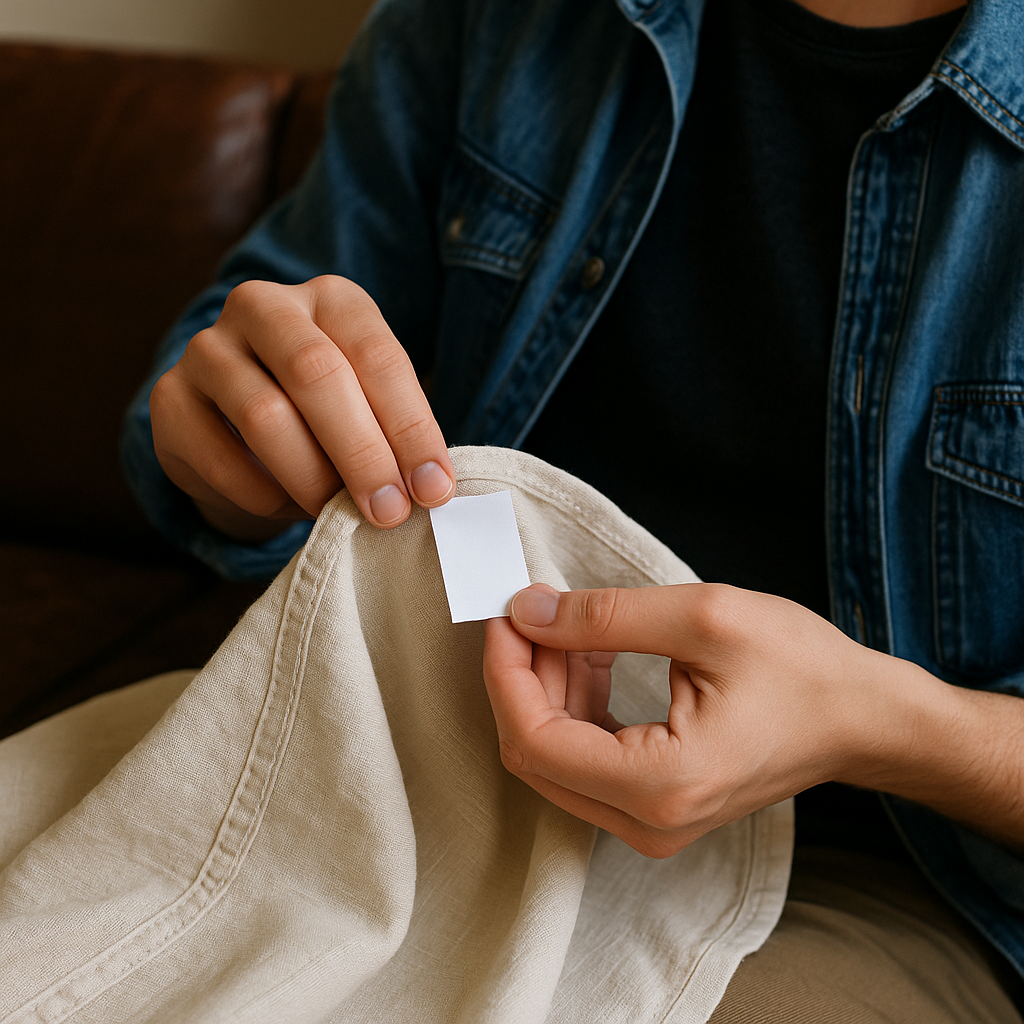
I love the idea that older clothing is automatically the greener choice. But the first time I started buying vintage garments specifically to dodge synthetics, I learned the hard way that my eyes were lying. In warm light, rayon can pass for linen. A seller can write "linen feel" (or "linen look") and technically not be wrong while you end up with a limp, shiny blend that pills the second you sit in a car.
So I do a boring, unglamorous check every time. If there is a fiber tag, I read it before I fall in love with the cut. If there isn't one, I flip the garment inside out and look at how it was built. Older linen and cotton pieces usually have something modern fast-fashion stuff often skips: generous seam allowances and hems you can let down. I'm talking a hem that looks like it was meant to be adjusted, not a skinny little fold that leaves you nowhere to go. That extra fabric matters for sustainability in a practical way. It gives you a second and third life in the same piece without heroic tailoring.
I also watch for the kinds of repairs that tell the truth. A neatly darned spot on a sweater or a reinforced underarm seam doesn't scare me. It usually means someone cared enough to fix it instead of tossing it. What does give me pause is repaired that really means weak. If the fabric around a mend looks thin or you can see the weave opening up, you're buying a future tear, not a long-lived garment.
Then I zoom out to the collection angle. If you're paying a premium because an item is being sold as a sustainable find, the tag and the construction should back up that story. If they don't, it's just a costume for your values, and it won't wear like one.
When the greenest buy is the one you can service
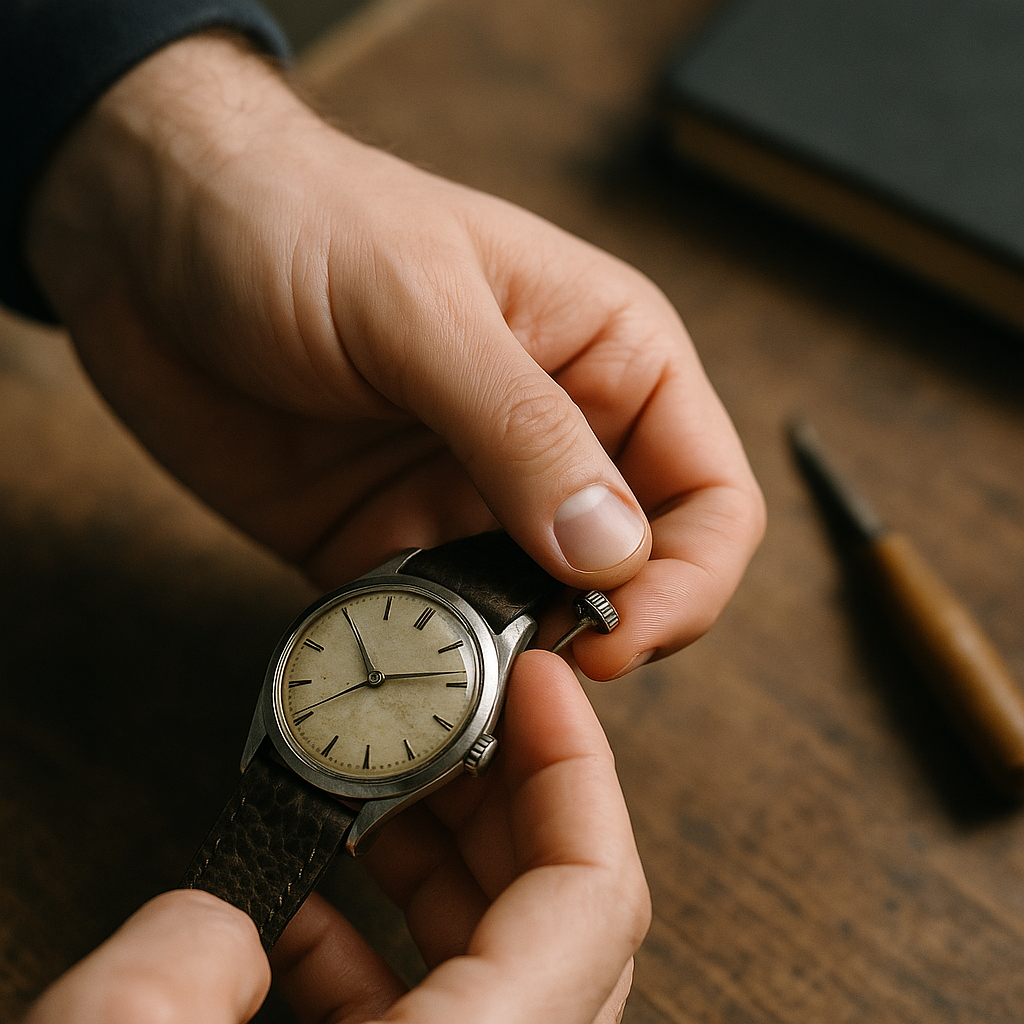
The sustainability pitch lands differently with vintage watches because you can draw a straight line between made and still running. You wind it. You feel the click of the crown. You hear the rotor (if it's automatic) doing its little lazy spin. If it keeps time and a watchmaker can get parts, that thing is basically a tiny argument against disposability.
But collectors are reassessing value here for a reason: not every old watch is serviceable in a way that makes sense. The green halo fades fast when the only way to keep it alive is to ship it across the country twice a year and source unobtainium parts from a donor movement. Before I buy, I ask two questions that are not romantic at all.
First: has it been serviced, and can the seller say by whom? I don't need a spreadsheet, but I do want something more concrete than "runs great for its age." A date, a shop name, even a photo of a service receipt is a different level of seriousness. Second: is it a model with a realistic support ecosystem? Think common workhorses from brands with deep back catalogs and a lot of working examples in circulation. A vintage Seiko or Omega that plenty of independent watchmakers are comfortable with is a different sustainability play than a quirky, obscure piece that requires one specialist who is booked out for months.
There's also the temptation to treat patina like a moral virtue. Sometimes it's honest wear. Sometimes it's damage that will keep spreading. Moisture intrusion is the classic: a little spotting on the dial can be evidence of a past leak, and it doesn't matter how original it is if the case isn't sealing and the movement starts corroding. I don't pretend a quick look can certify anything, but I do look for obvious red flags: haze under the crystal, gummy crown action, or a caseback that looks chewed up from repeated bad openings.
If the goal is a lower-impact collection, the best value isn't the rarest dial. It's the piece you can maintain on a normal cadence and wear for years without turning every repair into an air-freight drama.
Shipping, storage, and the carbon you didn't price in
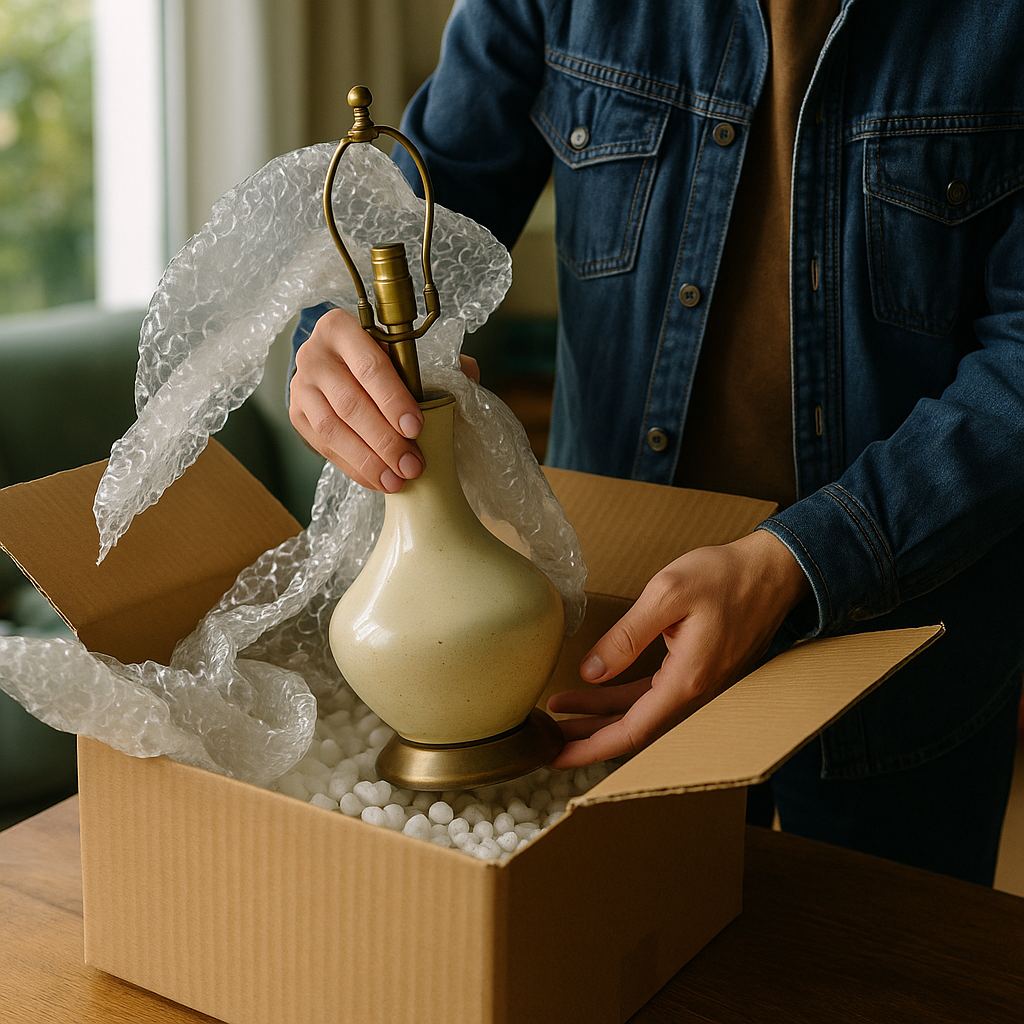
I don't think collectors talk enough about the unsexy middle of the transaction: the part where your sustainability story gets wrapped in foam and driven around the planet. Vintage markets have gotten so global that it's normal to buy a mid-century lamp from a seller three time zones away, and then act like you just saved a tree because it isn't new.
Here's how I sanity-check myself before I hit Buy Now. I start with the object type and ask, bluntly, what it takes to move it without destroying it. Ceramics, glass, framed art, and anything with a protruding finial usually need a lot of void fill. If the seller is using double boxing, corner protection, and a mountain of bubble wrap, that might be the responsible packing choice. It's also a real materials footprint that doesn't disappear because the item is old. If I'm buying something fragile, I prefer to buy it close enough that ground shipping is plausible, or I wait and try to find it locally at an estate sale where I can carry it out myself.
Storage is the other invisible line item. I learned this with paper ephemera and textiles. If you need acid-free boxes, unbuffered tissue, and a low-humidity closet to keep an item from foxing or mildew, that's fine, but it is part of the cost of keeping the thing out of the landfill. I look for objects that can live in normal home conditions without a museum routine. A sturdy stoneware bowl you can use, a solid brass hardware set, a wool blanket that can be aired out, stuff that earns its shelf space by doing a job.
And then there's the resale loop, which is where tastes changing really shows up. A trendy category (say, certain 1970s decor silhouettes) can spike and then cool off, and suddenly the same pieces bounce from buyer to buyer. That's not preservation. It's churn. When I see a listing that has clearly been flipped multiple times, I think twice unless it's something I genuinely plan to keep and use.
Buying older can be a sustainability win. It's just not automatic. The trip, the packing, and your ability to live with the piece matter as much as the age stamp.