
Three practical ways I build credibility with dealers and experienced collectors before pursuing pieces I may want to hold for years.
Start with a one-page whisper list, not a wish list

I learned this the hard way at an opening-night preview where everyone was holding the same plastic flute of prosecco and pretending they were just there for the art. The people you want to meet can smell a broad, hungry ask. So I stopped leading with a wish list and started carrying what I call a whisper list: one page, three lines max, written so it reads like a collector who has already done the homework.
Mine looks like this: category (tight), time window (tighter), and what I will not buy (the part that signals taste and restraint). Example: mid-century studio ceramics, 1950 to 1970, no restored signatures; or first-edition sci-fi paperbacks, specific imprints, no trimmed jackets. I keep it plain. No grand story about my "journey," no talk about future appreciation. If someone asks why those boundaries, I can answer in two sentences without launching into a TED Talk.
Then I build the networking around the list, not around me. When I DM a collector I admire on Instagram, I send one clean paragraph and include one detail that proves I know their lane: a show they did, a piece they lent, or a catalog essay they were quoted in. The whisper list is always the second paragraph. If they reply, it is usually with one of three things: a correction (gold), a warning about a recurring fake (also gold), or a name to talk to. Any of those beats a polite "good luck".
One practical move: print two copies on decent paper and keep them in a notebook. At fairs, I will hand it over only after a real conversation, usually right when we are both looking at the same object in a booth, and we have something concrete to point at. That moment makes the paper feel like a continuation rather than a cold pitch.
Bring a show-and-tell photo that proves you can close
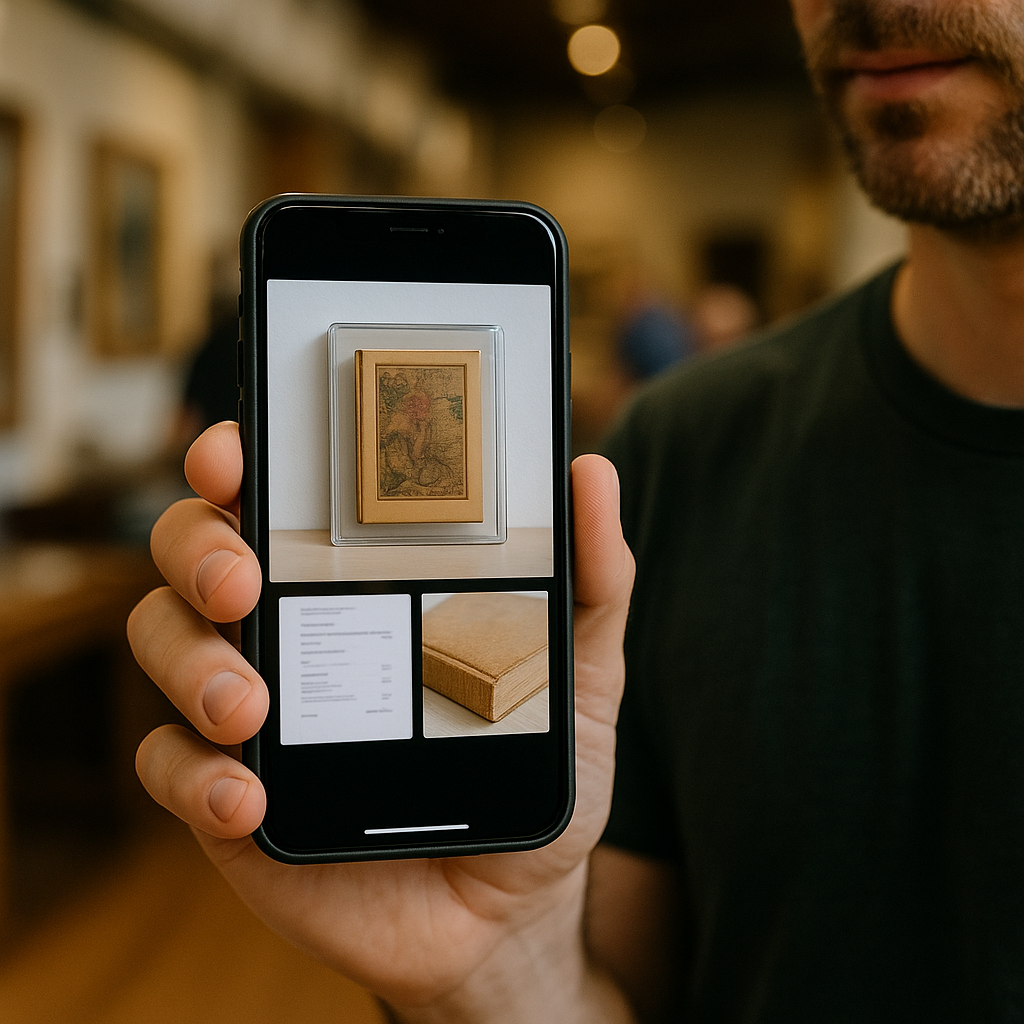
If you're trying to network with people who buy rare things for a living hobby, your problem isn't access. It's trust. Dealers and experienced collectors often have limited time, so a focused approach can make it easier to show that you've done your homework. So I started showing one quiet piece of evidence that I'm not going to waste their time: a single photo on my phone that demonstrates I can buy, document, and care for an object like an adult.
This is not a flex shot with a watch in the corner. It's boring on purpose. Mine is a clean, well-lit image of one item I already own, shot straight-on, plus two supporting slides behind it: the receipt or invoice (with personal info hidden) and a detail photo showing the condition. If the category calls for it, I'll include a picture of the case, the archival sleeves, the humidity meter, whatever applies. When it's wine, it is a cellar temp/humidity readout. When it's paper, it's acid-free storage. When it's something that can be refinished, it's the untouched surface and the note that I kept it that way.
Here's what surprised me. I've found that the photo can change the conversation. It gives dealers and collectors something concrete to ask about, from where I bought the piece and what I passed on to what I'm hunting next. It also gives you a natural way to ask for help without sounding needy. I'll say, "I'm trying to stay inside this lane. If you see a better example than mine, will you text me?" That is an easy yes because it doesn't commit them to selling you anything, just to keeping you in mind.
A small detail that matters at fairs and auctions: I keep the image in a dedicated album called collection references, so I'm not scrolling past vacation photos to get to it. People notice that, too. It is a tiny detail, but having everything ready saves time and makes the conversation less awkward.
And if you're thinking, I don't have anything good enough to show, pick the most disciplined purchase you've made, not the most expensive. The point isn't price. It's proof of behavior.
The two-intro email I send after the room clears out
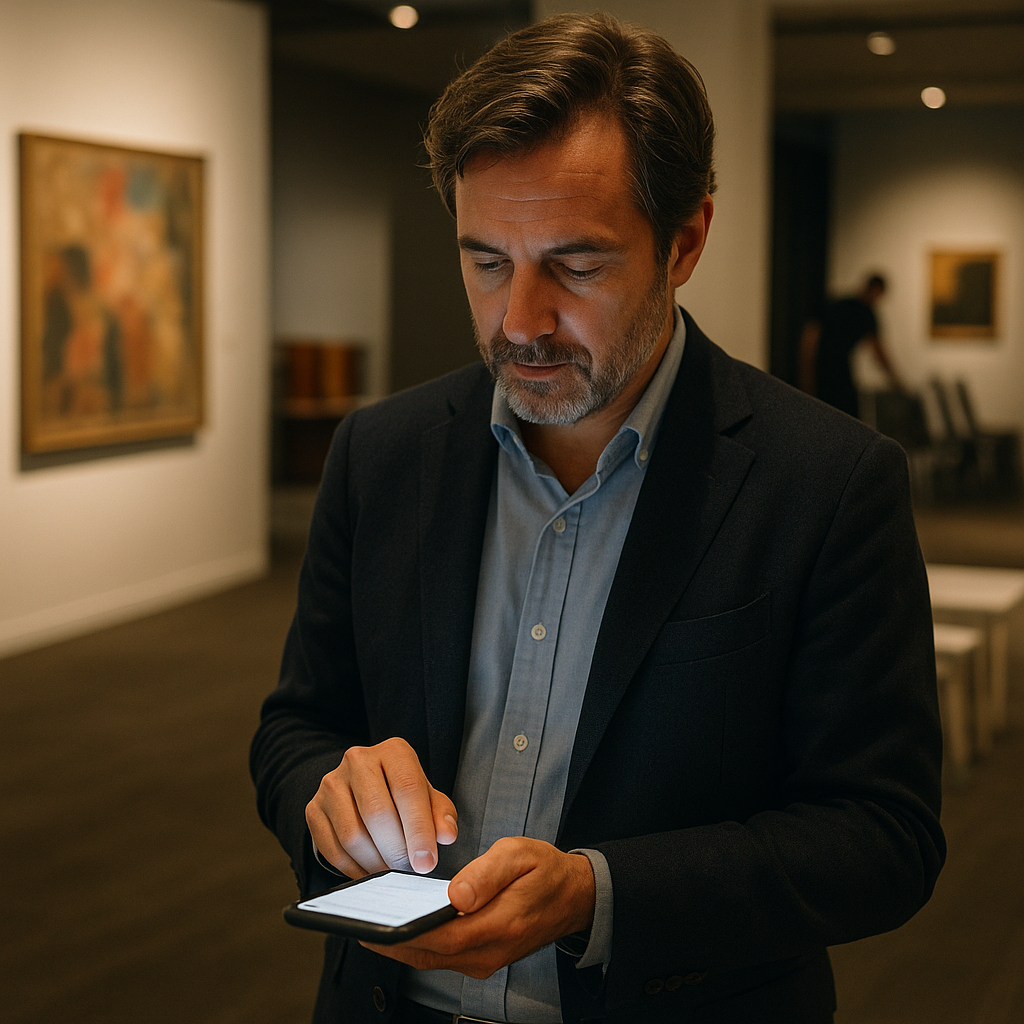
Some of my best networking with experienced collectors happens after the glamorous part, not during it. The best conversations I've had were in the five minutes when the booth lights start dimming, the auction staff is stacking chairs, and everyone suddenly turns into a normal person who wants to get home. That's when I follow up, but I do it with a very specific kind of email: two introductions, both easy, and neither one framed as "can you open doors for me."
The structure is simple:
- Line 1: where we met and what we stood in front of. Not great to connect. More like, "We talked at the preview while looking at the 1963 piece in Booth 14."
- Line 2: one sentence proving I listened. A preference they stated, a condition rule they have, a maker they avoid.
- Line 3: my whisper list, but tightened to the exact sliver we discussed.
- Line 4: the ask, but it's a choice between two micro-actions.
My actual ask reads like this: "If you think it's appropriate, would you introduce me to (Dealer A), who seems to handle this material, or (Collector B), who has the sharper eye for condition? Either is helpful, and if neither makes sense, no worries." I've found that two names work well. It keeps the request focused without turning the email into a long list of contacts I'm hoping to reach.
Then I make it safe for them to say yes. I include a 2-sentence blurb they can forward as-is, written as if it came from me: who I am, what I'm seeking, and that I'm ready to move when the right piece appears. I also add one line that protects their reputation: "If anything feels off, please feel free to ignore this and I won't follow up." It sounds almost too polite, but people with reputations to protect appreciate an exit ramp.
I track these intros like deals, not like friendships. I note who introduced, who responded, and how long it took. When something does come through, I circle back with a quick thank-you and one detail about what happened (even if I passed). That's the part that turns a one-time introduction into a long-running text thread.