
Three summit vantage points I go back to, plus the exact timing and small gear choices that keep the view from turning into a windy, crowded shrug.
The cairn line that keeps you on the good rock
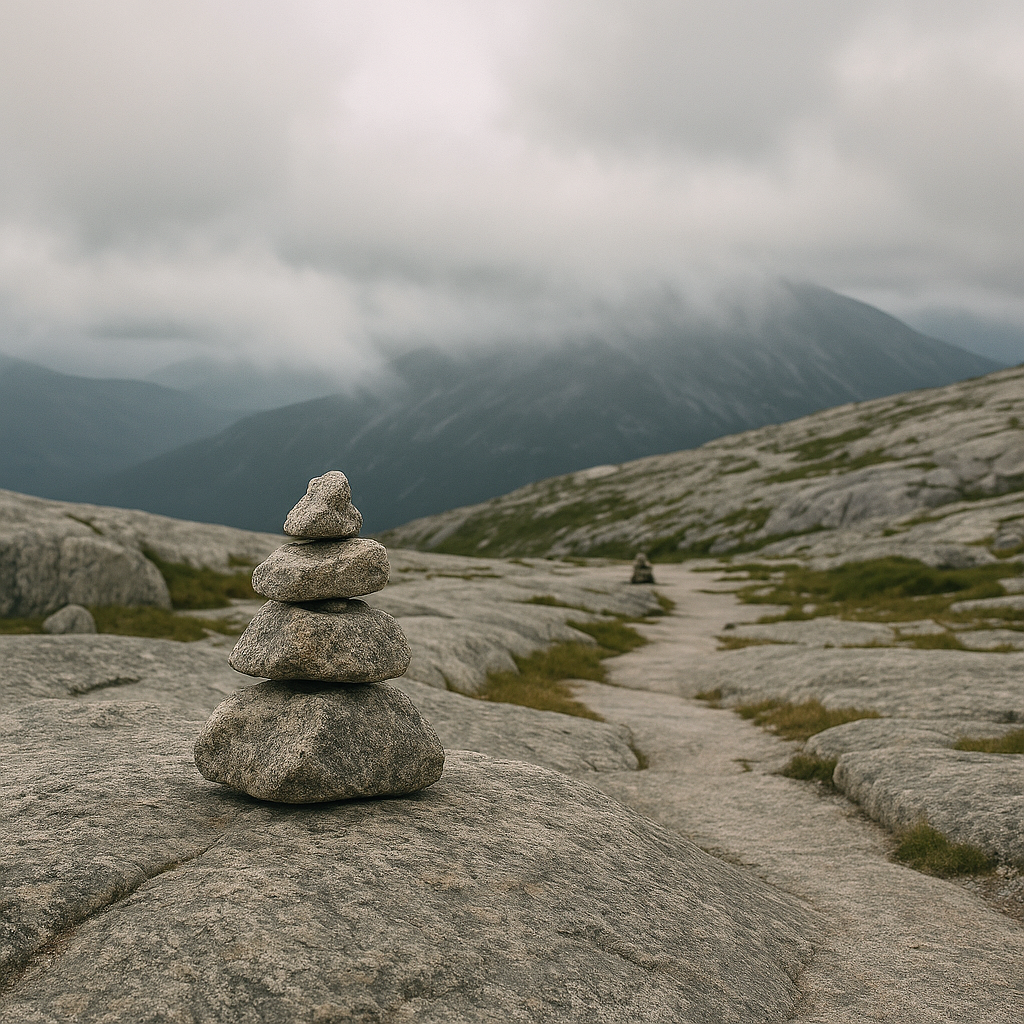
On bald summits and above treeline ridgelines, the best vantage point is often the one you can reach without wandering onto the wrong slab. I used to treat cairns as cute trail jewelry. Then I got socked in by a fast-moving cloud bank on a high point with a lot of lookalike granite and a lot of side paths that weren’t trails. Since then, I pay attention to the cairn line the same way I pay attention to switchback cuts: it tells you where other people already tested the footing.
Here’s the pattern I look for. A useful cairn isn’t a single pile by itself. It’s a conversation across the rock: you spot one, then you can usually spot the next one 30 to 80 yards ahead on the same bearing. On many popular routes, the cairns sit where the rock is most stable and the route avoids fragile alpine plants that are hanging on in cracks. If you’re on a summit block and the cairn line suddenly disappears, I stop moving and scan, because the trail is either crossing a wider slab (cairn farther than you expect) or ducking into a notch you can’t see from where you’re standing.
For the vantage point itself, I pick a perch that’s consistent with the cairn line. That sounds fussy, but it saves you from that classic summit mistake where you scramble ten feet higher and end up on a tilted, gritty plate that feels like it wants to skate. I’ll take the slightly lower boulder that’s flat enough for a sit pad and has a clean view corridor. If the wind is up, I tuck behind a rock fin on the lee side. I can still see the basin and the spine of the ridge, and I’m not fighting my hat with one hand while trying to take a photo with the other.
One more thing: I don’t add rocks. I’ve watched people build new cairns because they want to “help,” and it just creates options where there should be one line. The payoff of a summit vantage is clarity. The route up should be the same.
Switchback math: how I time the summit so it feels wide-open
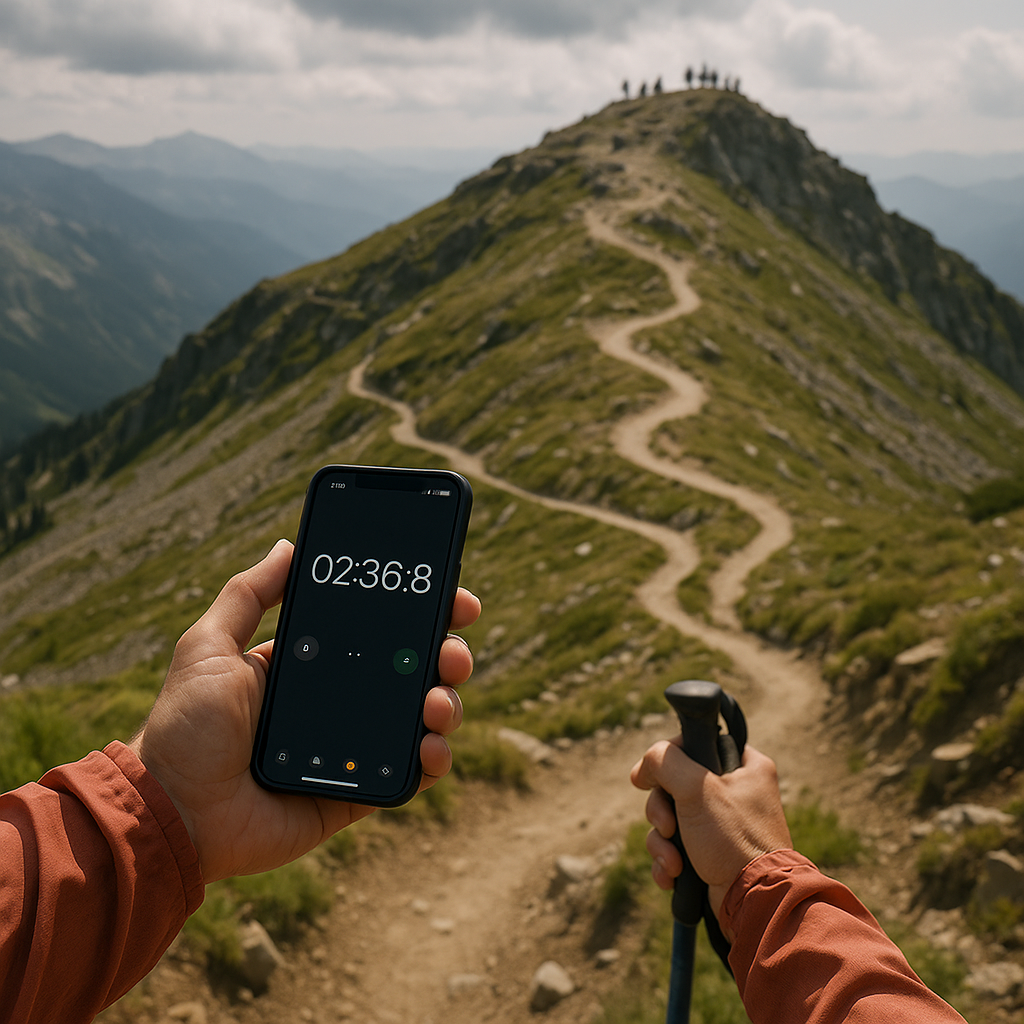
I’ve learned to treat switchbacks like a metronome. On the uphill, they hide the grade. On the downhill, they tell you how traffic will feel at the top. If you’ve ever hit the last few switchbacks to a summit and suddenly you’re in a slow-moving line of people taking turns on the high point, you already know the vibe I’m trying to avoid. I want the view, not the queue.
My timing trick isn’t complicated, but I only got consistent about it after enough “why is everyone here now?” moments. I count time between landmarks on the ascent: from the last reliable water to the first exposed switchback set, then from that set to the ridge crest. Those two chunks don’t change much day to day, even when I’m tired. Once I have those numbers for a route, I can back into a start time that puts me on top either (a) right after sunrise when headlamps are just getting stowed, or (b) in that late-afternoon window when day hikers are already drifting back down and the light starts to angle across the valley.
On a popular mountain, mid-morning is the danger zone for crowding and for weather building. I’m not making a sweeping claim about every range, but I’ve been on enough summer hikes where you can watch clouds stack over the ridge while you’re still on the upper switchbacks. So I plan the summit stop like a short appointment. I’ll eat before the final push, not on the summit. Something you can chew without pulling your pack apart helps: a bar, a tortilla wrap, a handful of trail mix. Then, on top, I’m in and out in a measured way: photos first while my hands still work, then layers, then a quiet sit with a view.
Gear-wise, this is where a wind shirt earns its keep. I carry a Patagonia Houdini or similar because it weighs almost nothing and it turns an exposed perch from “can’t feel my ears” to “I can sit long enough to notice the glacial scratches in the rock.” If I’m using trekking poles, I shorten them slightly on the last steep switchbacks so I’m not overreaching. It sounds minor, but it keeps my shoulders from frying right before the payoff.
The best summit vantage points aren’t only about what you see. They’re about how long you can stand to stay.
Pick the summit seat like a photographer, not a hero
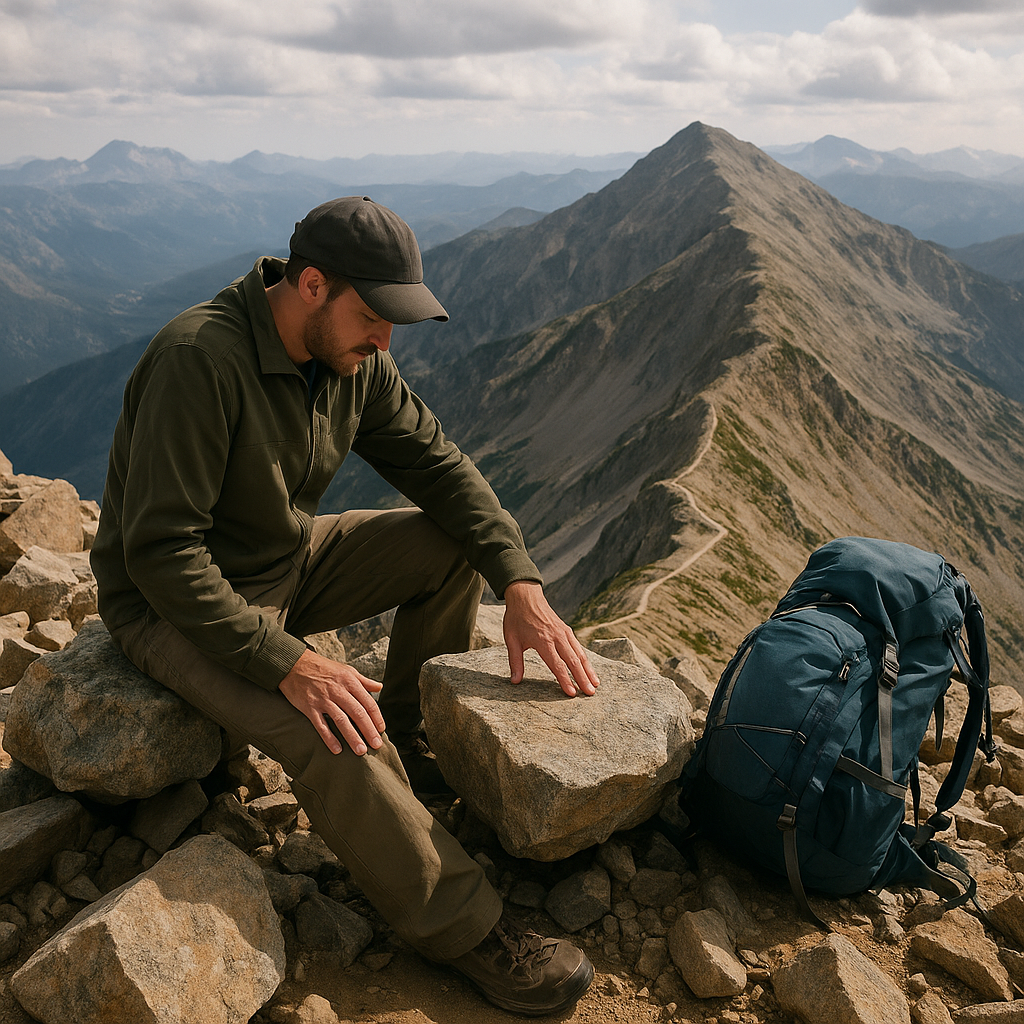
I used to walk straight to the highest rock because it felt like the point of the whole thing. Now I’m pickier. The summit that photographs well is rarely the summit that feels good to occupy, and I’m not interested in standing on a wobble block with my heart rate bouncing just to prove I tagged the absolute top.
When I reach a summit area, I do a quick lap that’s more about angles than elevation. I look for three things: a stable platform, a clean horizon, and a safe place to set my pack down without it sliding into a crack. If the summit is a pile of talus, I’ll test a candidate seat by shifting my weight before I commit. The sound matters. A dull, settled clunk is what you want. A gritty rattle means the rocks are going to move under you the second you relax.
For the view, I like to find the spot where the ridgeline makes a diagonal through the frame instead of a flat line across the middle. It gives you depth. You can see the switchbacks you just climbed, the saddle you crossed, and the next peak over, all in one sweep. If I’ve brought a paper topo map or I’m looking at a topo layer offline (Gaia GPS is my usual), this is where it becomes fun. You match the contour lines to what’s in front of you: the bowl-shaped basin, the knife-edge ridge, the gentle shoulder that fooled you into thinking the summit was close an hour ago.
I also think about what the summit is doing to my body temperature. Exposed rock can radiate heat if it’s been in the sun, but if it’s shaded and windy it’ll steal warmth fast. A small foam sit pad is the unglamorous hero here. Mine is a beat-up Therm-a-Rest Z Seat that lives folded in the outside pocket. It means I can sit still long enough to let my eyes adjust and pick out details: the tiny lake that doesn’t show up in photos, the scree fan that looks like spilled coffee grounds, the way the clouds are dragging a shadow across the valley floor.
If there’s a summit register box, I’ll sign it, but I won’t build my entire stop around it. The point is the vantage. Find your seat, get your layers right, and let the mountain do its thing.