
Three window-treatment and glazing choices that control glare, conceal hardware, and help art compete less with a bright skyline.
Motorized shades: the quietest way to tame skyline glare
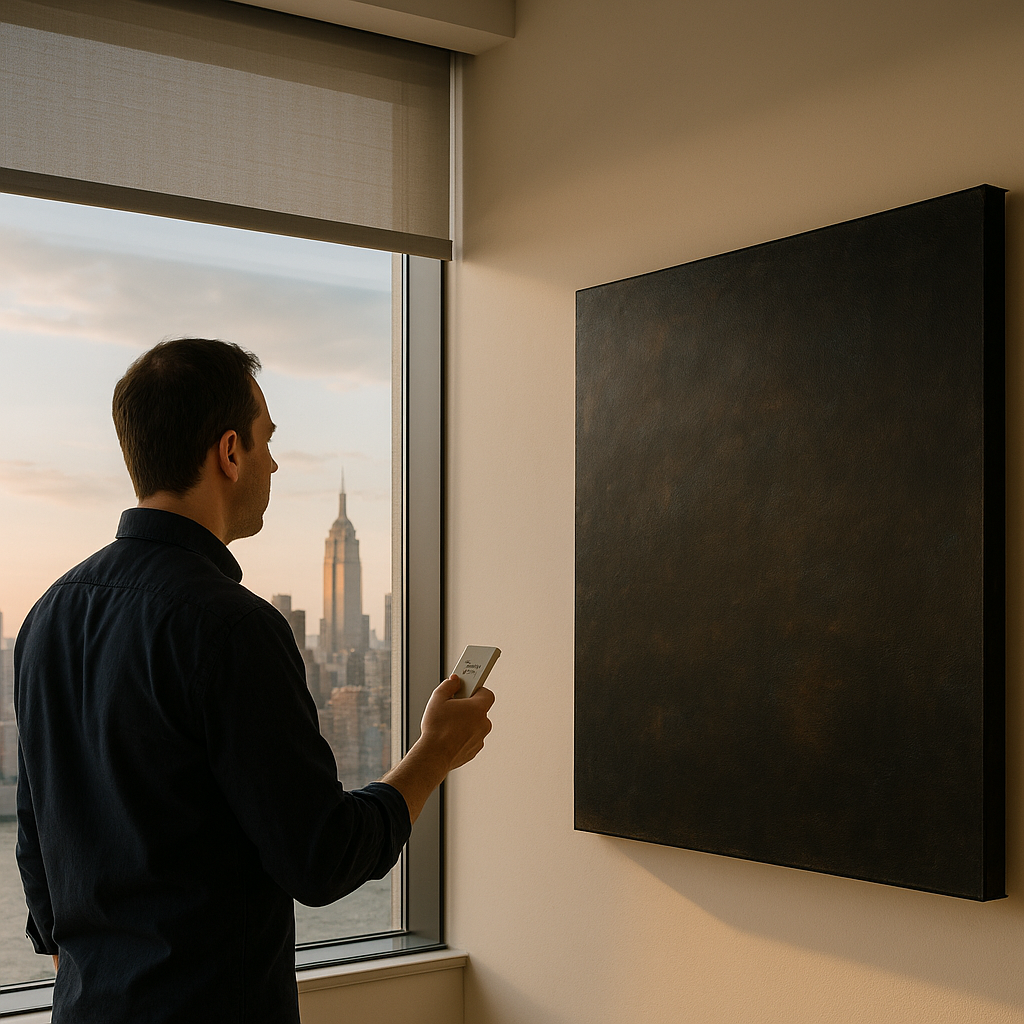
If you only ever see the view in listing photos, it looks like free drama. Living with it is different. A glass wall facing the skyline is essentially a giant lighting instrument that changes every hour. The first time I tried to enjoy a large, dark-ground painting in late afternoon sun, the surface turned into a glossy postcard of my own windows. That is when motorized shades stopped feeling like a gadget and started feeling like a collector's control surface.
The motor matters less than how the shades are programmed. I prefer a few useful shade positions rather than a long menu of scenes: fully open when direct sun is not hitting the art, partly lowered for glare control, and fully lowered when stronger light protection is needed. The right settings depend on the window orientation, time of day, artwork, and shade fabric.
Two practical details deserve attention before choosing a shade system. First, specify a shade fabric with a real openness factor that fits the art, not just the room. A 1% or 3% solar-screen fabric can reduce glare while preserving some outward view, but openness percentage alone does not determine performance. Fabric color, solar properties, window orientation, and the intensity of direct sunlight also matter; sensitive artwork should not sit in direct sunlight. Second, hide the hardware. A shallow pocket at the head of the window with a clean access panel keeps the roller and wiring out of your sightline when you're standing at the art wall. A visible hem bar reflected in framed glazing can also make the shade hardware more noticeable.
Once the settings are right, the skyline remains visible without competing as strongly with the artwork.
The rail you don't see: recessed track + a blackout return
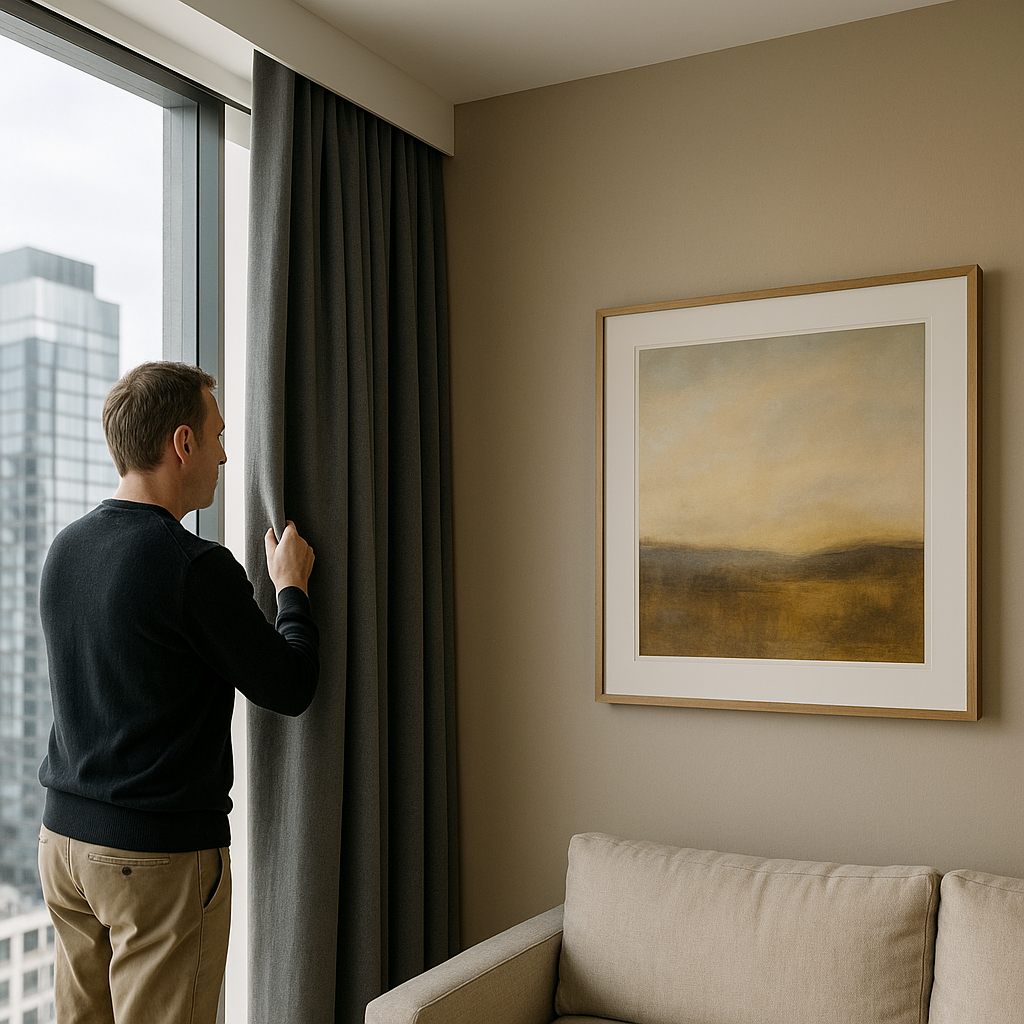
There's a particular kind of high-rise living room that looks incredible until you try to make it function like a gallery: floor-to-ceiling glass on one side, a hero art wall on the other, and nowhere to put anything without it feeling like a showroom. One of the most effective solutions I've used is a recessed ceiling track paired with a return that carries the drapery back to the wall.
Shades can reduce glare, while drapery adds another layer of light control and can soften the room visually and acoustically. Recessing the track makes the hardware less prominent and preserves a cleaner ceiling line. Then extend the fabric beyond the glazing and return it to the wall to reduce light leaking around the sides. This can also lessen reflections on framed works when sunlight reaches the room at an angle.
I also like a two-layer approach in rooms dominated by the view: a light-filtering layer for everyday glare control and a heavier blackout layer when substantially less daylight is needed. A blackout layer can still look residential rather than commercial when the fabric, fullness, and hem are carefully specified.
This is also where you plan your hang heights. If you know the drapery will stack to one side, don't put your best piece where the folds will crowd it or where the return will cast a shadow line. The arrangement should still work visually with the curtains open, partly drawn, or fully closed.
Glass that behaves: low-iron, low-E, and the frame choices that follow

In a skyline apartment, the view may dominate the room, but it also introduces a large and constantly changing source of daylight. Some architectural glazing can introduce a noticeable color cast, depending on the glass composition, coatings, thickness, and overall glazing system. A color shift can become particularly noticeable beside artwork containing neutral whites or carefully rendered skin tones.
If the glazing can still be specified, ask the architect or glazing consultant about low-iron glass and the performance of the low-E coating. Low-iron glass reduces the green cast common in conventional clear glass, while low-E coatings primarily control heat transfer and solar gain; their visible-light transmission and appearance vary by product. Neither replaces proper control of daylight around sensitive art. If the glazing noticeably shifts the color of transmitted daylight, artificial lighting may need to compensate. Where the glazing is still being specified, its visible-light transmission and color characteristics are worth reviewing early.
Once the window glazing and daylight levels are understood, framing decisions become easier. Anti-reflective glazing can be particularly useful when framed works face bright windows because it reduces distracting surface reflections. For light-sensitive works, however, reflection control should be considered separately from protection against visible light and UV exposure. For paintings, I pay attention to where reflections land. A glossy dark piece opposite glass can turn into a mirror, no matter what. Sometimes a modest change in the artwork's position is enough to shift a distracting reflection away from the focal area. Sometimes it's rotating the seating, not the art.
One more thing that sounds minor and isn't: window mullions. The size, spacing, and finish of window mullions also affect how strongly the glazing pattern registers from the art wall. If your art wall is meant to feel like it floats against the view, the window pattern across from it needs to feel intentional, not like leftover engineering.