
Three window choices that quietly signal control, access, and status before anyone even sits down.
How sill height changes who gets the best view
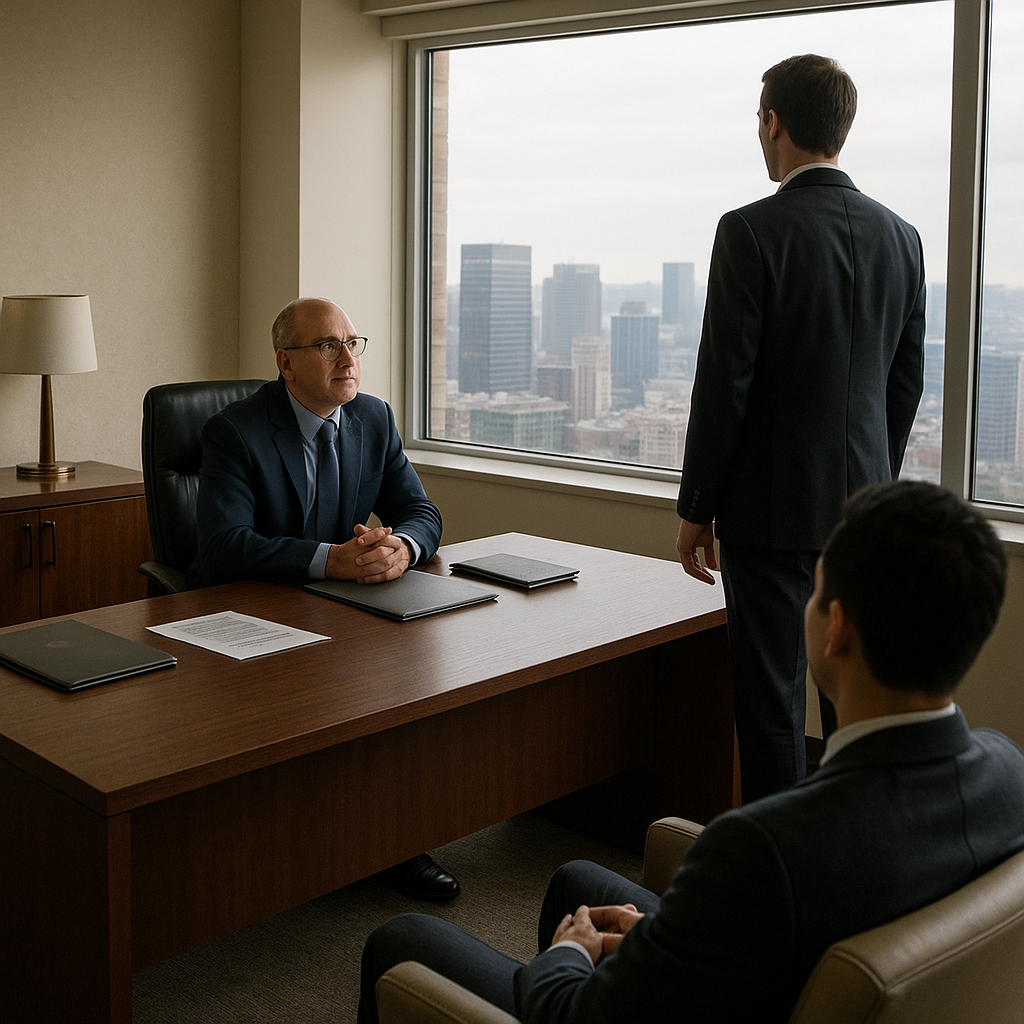
The most effective status window move I've seen has nothing to do with glass type or fancy shades. It's sill height. If the bottom of the glazing sits low, the view belongs to whoever is seated. That reads generous, even if the rest of the room is armored. When the sill creeps up, the room flips. Guests can see daylight, sure, but not the horizon unless they stand. Visitors are also less likely to stand simply to improve the view during a meeting. That difference in sightlines can make the executive's seat feel more privileged when it gets the clearest view.
I've walked a floor with a facilities lead where we watched it happen like clockwork. Candidates came in, did a polite glance toward the window, then snapped their attention back to the desk because there wasn't much else to look at from a visitor chair. Meanwhile, the executive's chair height was adjusted so the skyline landed dead center behind them. Not as a background for Zoom. As a live backdrop for the in-person moment when you look up and realize you're talking to someone who literally has a broader field of view than you do.
If you're designing for symbolic power, this is clean because it doesn't feel like a trick. It's just a high sill. A higher sill can also make visitors more likely to lean or shift to see more of the view. So the rest of the seating has to be calm and stable. A chair that swivels too easily turns the whole thing into a little awkward dance.
Why the window rarely lines up with the door
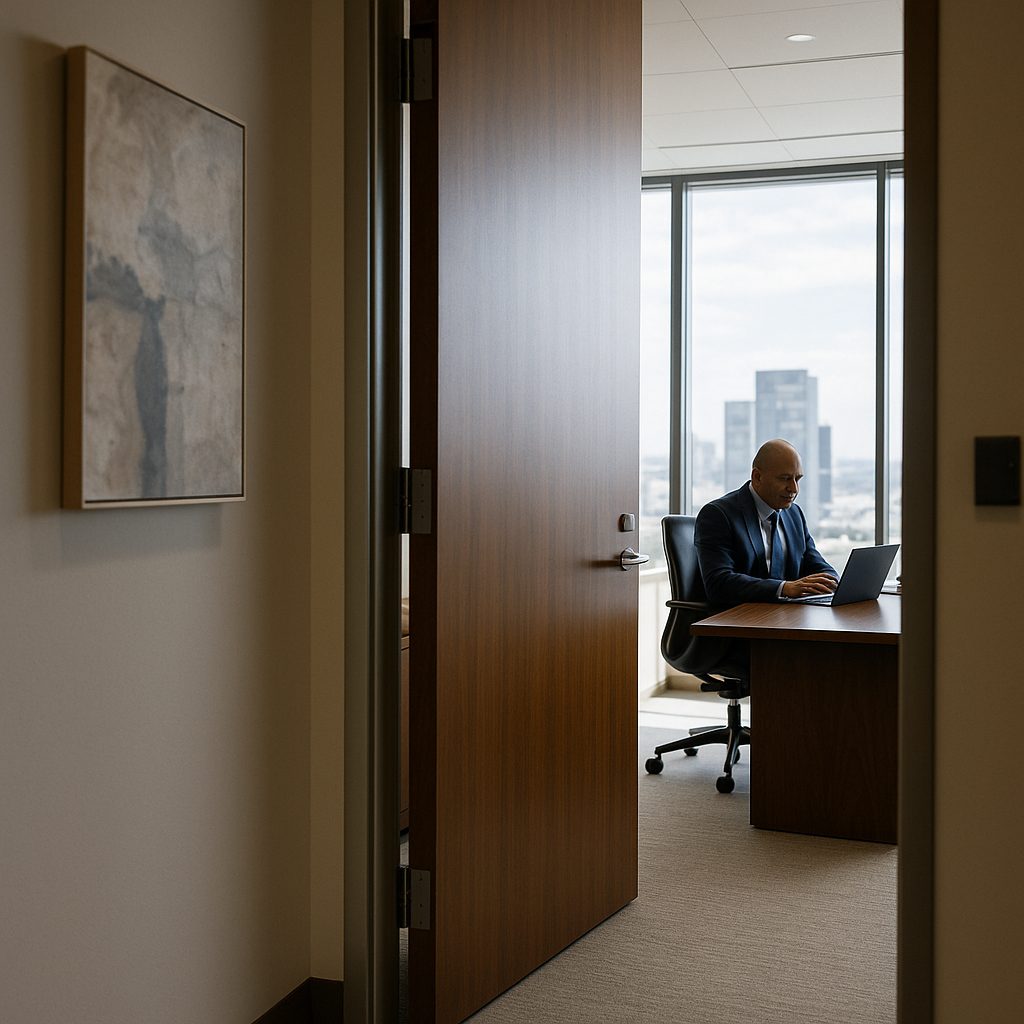
In executive offices designed for greater privacy, the entry may be positioned to avoid a direct line of sight to the main window wall. If the door cracks open and you immediately see the whole wall of windows, the office reads like a lounge. Beautiful, but socially porous. If you have to enter, pivot, and then discover the view, it plays like a reveal for those allowed in. The arrangement can make the room feel more private and controlled.
On one project, the client kept saying they wanted a space that felt "open" without feeling approachable. That sentence makes designers roll their eyes, but the window placement solved it. The glazing stayed full-height, but the entry axis was kinked. When you step in, you first encounter an art wall and the edge of a credenza. Only after you take two or three steps do you get the panorama. The seated executive sees the entry immediately and takes in the long view in the same glance. The visitor only sees the full panorama after moving farther into the room. It's a small thing that feels like protocol, not posture.
This layout also keeps the window from becoming a hallway billboard. People walking by can't casually tell who's inside or what mood they're in from a silhouette, hand gestures, or whether the desk is piled up. The light still reads from outside the door glass, so the suite feels bright, but the scene isn't available on a drive-by.
One practical note from doing it the hard way: when you bend that path, pay attention to where the thermostat, shades control, and any wall-mounted tablet end up. Controls are usually easier to manage when they sit near the primary user rather than in the visitor's immediate reach. Keeping controls near the primary user can also reduce accidental adjustments during meetings.
Layered shades: the view is there, but only on your terms

When people say an executive office feels powerful, they're often reacting to how the windows behave over the course of a day, not to what the glass looks like at noon. The best setups I've worked with use a two-layer shade stack: a solar screen for daytime glare control and a heavier roller shade (or drapery) that can close the room off when it's time for a sensitive conversation. It's the difference between a window that's a pretty rectangle and a window that's a dial.
The solar screen is the unsung hero. From the guest chair, it keeps the view legible without turning everyone into squinting silhouettes. From the corridor outside, it softens what you can read through the glazing, especially if there's any internal glass-wall action. And from the executive's seat, it lets you choose how much of the city gets invited into the meeting. A 3% openness screen generally provides stronger glare control and greater daytime privacy, while 5% preserves a clearer outward view and allows more light through. Where both glare control and full privacy matter, pairing a solar shade with a blackout layer gives the room more flexibility than relying on blackout alone.
Practically, the layered system gives the occupant much finer control over glare, daylight, view, and privacy. The room doesn't look like it's fighting the sun. It looks like it anticipated it. Even the sound matters: a quiet motorized roller reads intentional; a rattly chain pull reads like someone's office got the leftovers. Placing the shade control within easy reach of the primary occupant makes adjustments less disruptive during meetings. Motorized shades also let the occupant adjust glare or privacy during a meeting without getting up and interrupting the conversation.