What Police Officers Drive in Different Countries Around the World
If you pay attention, police cars reveal more than you’d expect. The vehicles officers drive are shaped by the roads they patrol, the weather they deal with, the budgets their departments manage, and sometimes even the cars their country builds best. A wide, open highway calls for something different than a packed city center or a mountain village. In the end, those choices come down to what works best for the job.
United States – Ford Police Interceptor Utility & Dodge Charger Pursuit

Credit: Wikimedia Commons
Across much of the United States, the Ford Police Interceptor Utility dominates patrol fleets. Based on the Ford Explorer, it replaced the long-running Crown Victoria and became the standard because it balances space, durability, and pursuit capability. With available all-wheel drive and heavy-duty cooling systems designed for long idling periods, it’s built for real-world police work. The Dodge Charger Pursuit remains another staple, especially in highway patrol units. Its V6 and V8 options give departments strong acceleration for interstate enforcement.
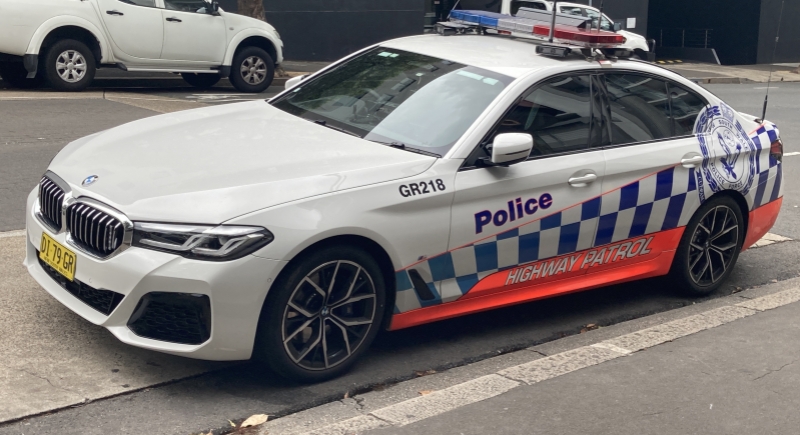
United Kingdom – BMW 3 Series, BMW X5 & Volvo XC90
Credit: Wikimedia Commons
In the UK, the BMW 3 Series and 5 Series have long served as traffic units because they combine sharp handling with enough interior space for equipment. The BMW X5 has become increasingly common because of its higher driving position and added versatility. Volvo XC90 and V90 estate models also feature prominently. These cars must navigate narrow urban streets one moment and motorways the next, so agility matters just as much as speed.
Germany – BMW 5 Series, Audi A6 & Mercedes-Benz E-Class

Credit: Wikimedia Commons
Germany’s Autobahn demands stability at high speeds, and police fleets reflect that. The BMW 5 Series, Audi A6, and Mercedes-Benz E-Class are widely used across federal states, typically finished in silver and blue livery. These sedans are engineered for sustained high-speed driving, something few countries require to the same extent. Estate variants are common, providing extra cargo space without sacrificing performance. Increasingly, electric models like the BMW i4 are being tested as part of broader fleet modernization.
Italy – Alfa Romeo Giulia & Lamborghini Huracán

Credit: Wikimedia Commons
In Italy, the everyday highway patrol car is often the Alfa Romeo Giulia. It is quick enough for motorway work, stable at high speeds, and still practical for routine stops and long shifts. Officers use it because it does the job well, not just because it looks good in blue and white. The Lamborghini Huracán is far less common, but it is real working equipment. The Polizia di Stato primarily uses it for high-speed highway patrol and for urgent organ transport between hospitals. These cars are fitted with police radios, lights, and a refrigerated compartment for medical transport.
Japan – Toyota Crown & Nissan Skyline
Credit: Wikimedia Commons
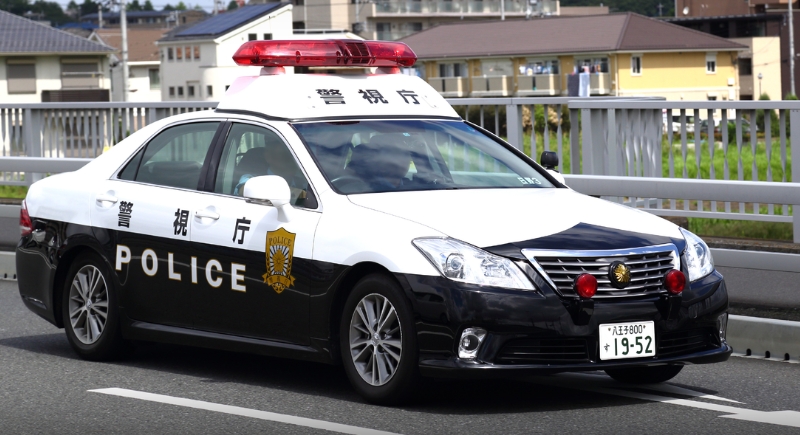
Japan’s police fleet focuses on reliability. The Toyota Crown has long been the standard city patrol car, valued for comfort, fuel efficiency, and durability during long shifts. Highway units sometimes use the Nissan Skyline for expressway traffic enforcement. In rural and mountainous regions, especially in heavy snow, larger vehicles like the Toyota Land Cruiser are used for their strength and traction.
Australia – Kia Stinger & Toyota Land Cruiser
Credit: Wikimedia Commons
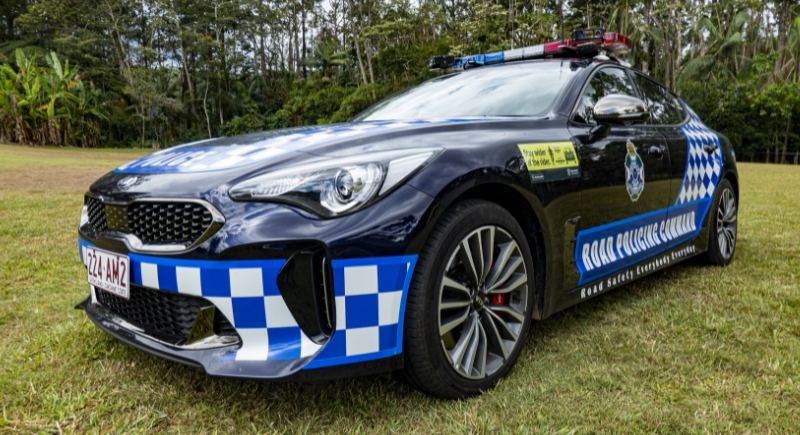
Several state forces adopted the Kia Stinger for highway patrol after the locally built Holden Commodore was phased out. Its turbocharged engine gives officers the speed needed for long-distance traffic enforcement. Outside the cities, especially in the Outback, police rely on Toyota Land Cruisers and Ford Rangers. These vehicles handle extreme heat, rough tracks, and long, isolated stretches of road.
India – Mahindra Scorpio & Toyota Innova
Credit: Wikimedia Commons
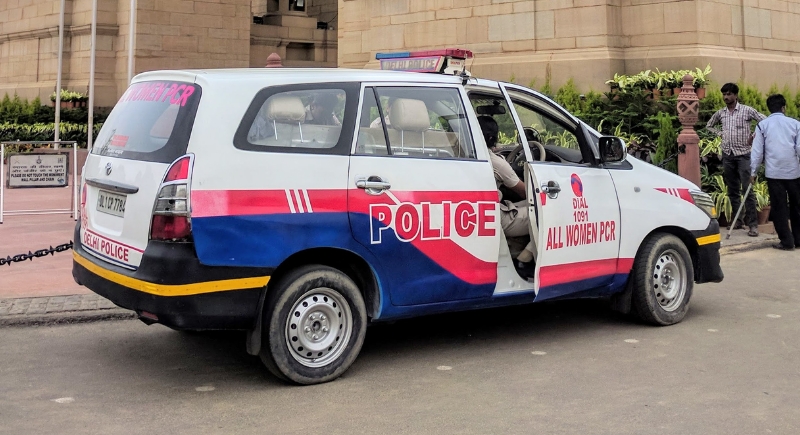
The Mahindra Scorpio is widely used across multiple states in India. It handles uneven roads and crowded urban environments with equal competence. The Toyota Innova serves as a dependable multi-purpose vehicle for patrol and transport roles. Budget efficiency plays a significant role in procurement decisions, so reliability and ease of maintenance are important considerations.
United Arab Emirates – Toyota Land Cruiser & Nissan Patrol

Credit: pexels
Despite the global attention drawn by Dubai’s supercar fleet, the backbone of policing in the UAE consists of Toyota Land Cruisers and Nissan Patrol SUVs. These vehicles are suited to desert highways, high temperatures, and long-distance patrol. Dubai Police also operate high-performance models like the Lamborghini Urus and Lotus Eletre R in tourist zones, but everyday policing relies heavily on rugged SUVs that can manage both urban streets and open desert roads.
France – Alpine A110 & Peugeot Patrol Vehicles

Credit: Wikimedia Commons
France’s Gendarmerie deploys the Alpine A110 for highway enforcement, replacing earlier high-performance patrol cars. Lightweight and agile, the A110 is designed to handle fast autoroute traffic with precision. Standard patrol units commonly use Peugeot and Renault models, as well as Dacia Dusters in rural regions. The fleet reflects a balance between national automotive heritage and practical enforcement needs.
South Korea – Hyundai Sonata & Genesis G80

Credit: Wikimedia Commons
South Korea’s police vehicles showcase domestic manufacturing strength. The Hyundai Sonata forms the backbone of urban patrol fleets, offering modern safety systems and fuel efficiency. For VIP escort duties, Genesis G80 and G90 sedans are frequently used. These luxury models provide smooth rides and advanced communication systems, underscoring the country’s emphasis on technology and refinement.