
Three practical checks that can help collectors assess condition, compare prices, and document art before assigning serious value to it.
The blacklight pass: what jumps out, and what stays quiet
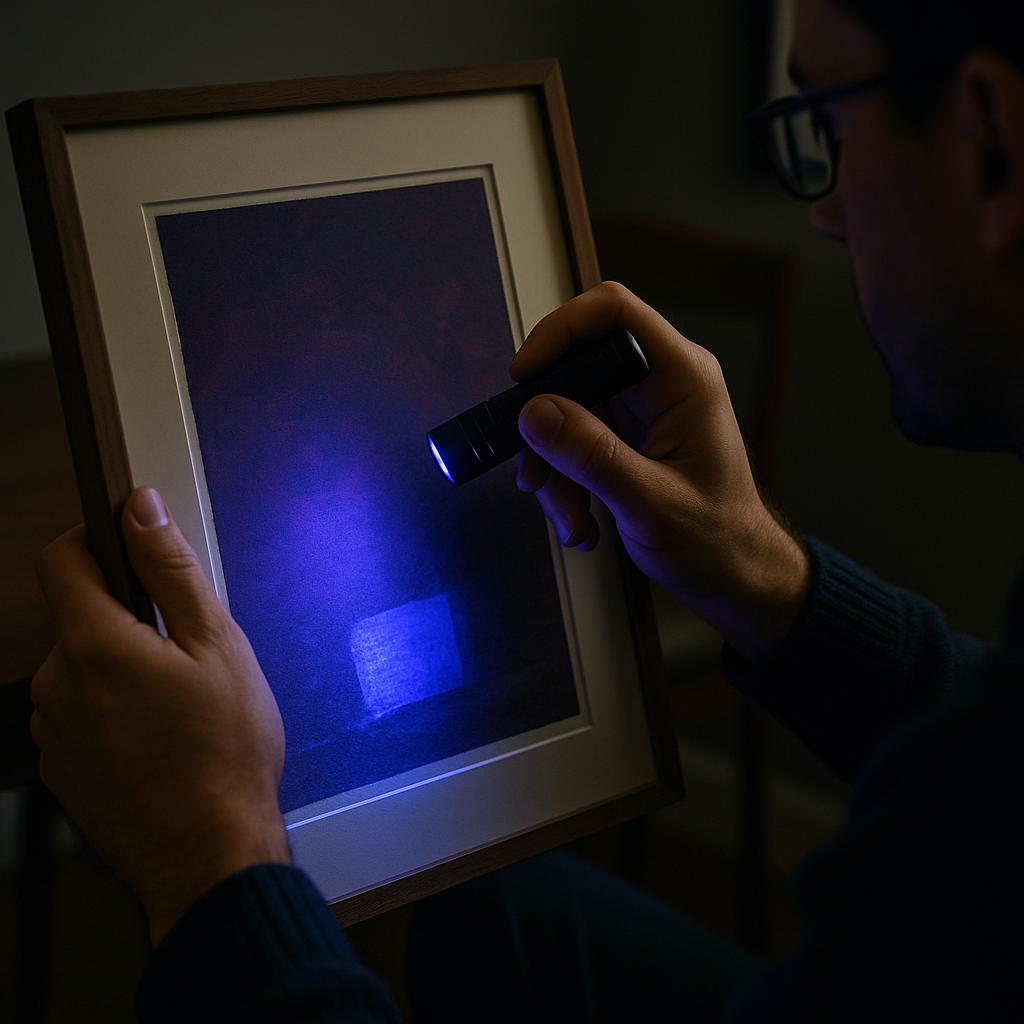
I keep a small 365 nm UV flashlight in my desk drawer because it answers one question quickly: am I looking at a single continuous surface, or a history of fixes? This is valuation, not CSI. You are not proving authenticity with a beam of light. You are looking for condition issues that could affect the value.
Here is how I do it without getting theatrical. I turn off the overhead lights, stand the piece upright if I can (a framed print against a chair works), and start at the edges. On works on paper, I am looking for brighter, blotchy fluorescence where someone touched the sheet with modern adhesives, tape residue, or an overzealous cleaning. Old paper can glow a little; what I don't want is a fresh, uneven patch that looks like a spill map. On paintings, the tell is often the opposite. Certain varnishes and touch-up areas can go dark and dead compared to the surrounding field. If I see a tidy rectangle that doesn't match the paint rhythm, I assume there was a repair, and I treat the estimate accordingly.
Two practical notes from doing this too many times. First, scan the back. I've seen hinge tape and backing boards that scream modern intervention, and that changes how I think about the whole package, even if the front looks fine. Second, photograph what you see under UV (even a phone shot) and write down where it is: "upper right margin, 2 inches in." When you're later talking to an appraiser or a conservator, that little map keeps you from sounding vague, and it keeps the conversation grounded in condition, not vibes.
If the UV pass shows multiple repairs, I don't automatically walk away. I stop valuing it like a pristine example. In the secondary market, a "nice from five feet" piece can still trade, but it trades in a different lane, and your numbers should reflect that lane.
Comping without getting tricked by a single splashy auction result

If you're treating art as a serious asset, comparable sales are where unrealistic expectations can creep in. One record-breaking sale hits your feed, and suddenly every similar-looking work becomes a six-figure "asset." That is how people overpay, then spend two years pretending they didn't.
My comp routine is boring on purpose. I start with at least three sources that publish realized prices: a major auction house database (Sotheby's, Christie's, Phillips), a marketplace with visible transaction history (Artsy can help, but I double-check), and a price archive like Artnet or MutualArt if I can access it through a subscription. Then I filter down until I'm comparing like with like: medium (oil vs acrylic matters), support (canvas vs panel), size within the same band, and year if the artist's market changed across periods. A 24x36 is not the same market as a 12x12, even when the image reads similarly on a phone.
Next, I normalize for the stuff sellers love to bury. Is it framed? Do you know if it is edited? For prints, edition size is not a footnote; it's supply. An AP may have a different market value depending on the artist, the edition, and how the proofs were issued. For paintings, a well-documented exhibition history can help liquidity, but only if it's real and relevant (not a group show with 200 names on the wall label). And I make sure I am comparing hammer prices with hammer prices, or prices including buyer's premium with the same, so the numbers stay consistent across venues.
Finally, I intentionally throw out the outliers. If one result is 2x the next-closest comp, I assume there was a special narrative: celebrity provenance, a charity lot, two bidders who took it personally, or a market moment that cooled a month later. I keep it as trivia, not as my valuation anchor. This is the part that feels unsatisfying because it isn't a single magic number. You end up with a range and a probability, which is exactly how you should talk about something you may need to liquidate under time pressure.
Provenance that holds up in a loan file
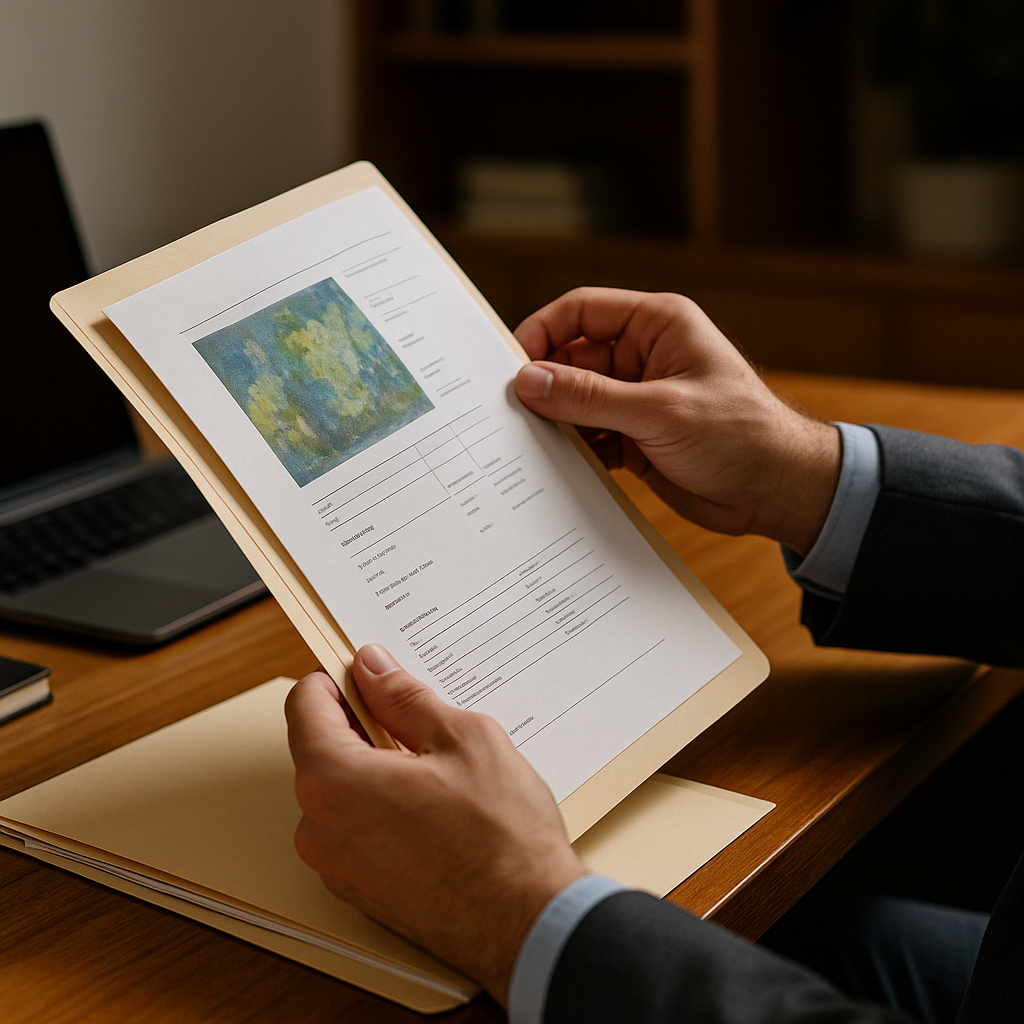
When collectors want their art to hold serious financial value, I ask one unromantic question: Can you hand a stranger a packet and have them understand what it is, why it is what you say it is, and how it could be sold? If the answer is no, you don't have a valuation problem. You have a paperwork problem.
Here's the checklist I build around each work, and yes, I keep it in a folder that could be emailed in five minutes. First: the bill of sale with the seller's name, address, date, and the exact description (artist, title, medium, dimensions). If it's from a gallery, I want the invoice and the gallery's letterhead, not just a credit card receipt. Second: any certificate of authenticity or artist letter, scanned front and back. Third: clear photos taken by you, not just the listing images: full front, full back, signature close-up, and any labels or stamps on the stretcher, backing paper, or frame rabbet. I also photograph condition issues in raking light so you won't forget that tiny buckle in the paper or the hairline crack in the paint later.
Fourth: exhibition and publication references, but only if they are verifiable. A screenshot of a PDF isn't the same as a catalog page with an ISBN. If there's provenance that includes previous collectors, I write it as a chain with dates and sources. "From a private collection" provides little useful provenance unless the ownership history can be documented. And if you bought through a dealer, I keep the dealer's contact details because the fastest way to resolve a question later is often a two-sentence email from the person who placed it.
Two small moves have saved me headaches. I store the digital packet in two places (a cloud drive and an offline backup), and I use consistent filenames like Artist_Title_Year_24x36_Invoice.pdf. Also, I don't let framing swallow evidence. If there's a label on the old backing board, I photograph it before any reframing happens. That label is often the only breadcrumb that ties the piece to a gallery show or a prior sale. Losing it doesn't make the work fake, but weaker documentation can make valuation and resale more difficult.