
Before chasing a term sheet, I run a three-part pilot covering customer demand, the product’s entry point, and the path to financial payback.
The customer pull test (not the founder pitch)
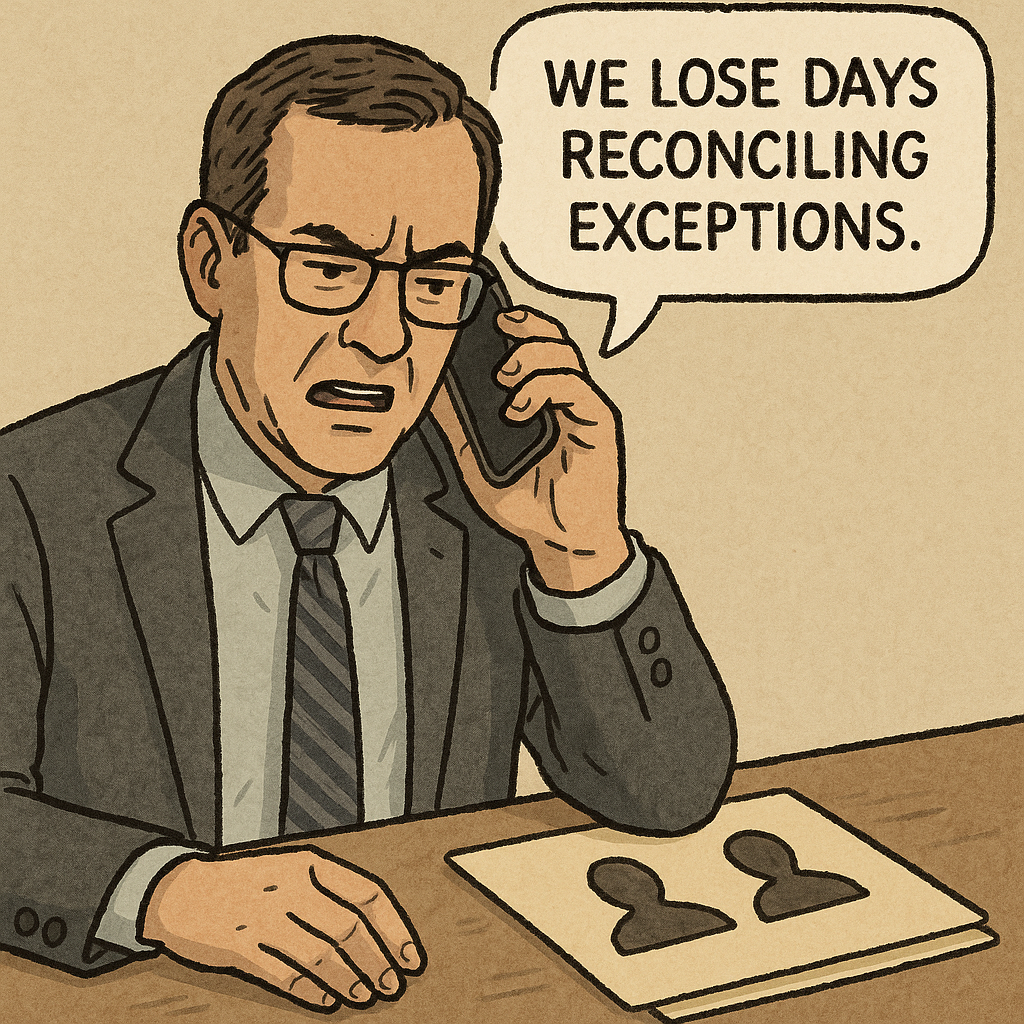
I don't start with the deck. I start with the person who might pay. If a startup tells me their ICP is, say, VP Ops at mid-market logistics companies, I want two names I can call this week. Not curated champions. A buyer and a near-buyer. When those calls happen, I'm listening for a specific kind of friction: the sentence that comes out fast, unprompted, and slightly annoyed. "We lose days reconciling exceptions" hits differently than "We'd like more visibility." The first one has a budget attached somewhere.
My prompts are blunt and boring on purpose. What did you try before this? What did it cost (time, headcount, vendor spend)? Who owns the decision? And the one founders hate: if this disappeared tomorrow, what breaks? Early-stage software is always pitched as inevitable. Buyers tell you whether it's optional.
In venture, the trap is believing the founder's narrative arc: great pedigree, big market slide, and a product demo that looks clean because the data is prepped. Customer pull sounds messier. You'll hear "We could probably do it in-house," "This would need our IT to sign off," or "Security will slow this down." Good. Those are the real hurdles that dictate sales cycle length and cash burn, and they show up in the first conversation if you ask directly.
If I can't get at least one buyer on the phone, I treat that as information, not bad luck. Either the company isn't far enough along, or the go-to-market is so founder-dependent that nobody wants their reference calls used as a fundraising prop. Both are fine reasons to pass without drama.
The wedge: where this lands in the org chart

When execs say they invest in early-stage tech, what they often mean is they like the idea of finding the next platform. Fine. But most winners don't enter as platforms. They enter as a wedge that one team can buy without a six-month committee.
So I map the first deployment like I'm the irritated operator who has to live with it. Where does it sit? Browser extension for a support team? Slack bot? API that hits Snowflake? If the answer is "It integrates with everything," I slow the conversation down and ask for the exact first screen someone touches on day one. If I can't picture the first ten minutes after login, it probably means the onboarding is a science project.
Then I ask where the budget comes from. Not whether a budget is available. Whose line item is it? A sales tool that gets expensed out of RevOps behaves differently from a security tool that drags procurement and an annual SOC 2 review along. Same product, different gravity. For enterprise deals, I also want to know who becomes the internal admin. If it's always the founder hopping on Zoom to fix permissions, that isn't product-market fit. That's professional services with better branding.
The wedge question also exposes a founder's honesty about what they're competing against. The real competitor is usually a duct-taped workflow: Google Sheets, Zapier, a few Python scripts, and a human being who remembers where the bodies are buried. If the startup can't beat that mess on day one, it won't matter how beautiful the roadmap is. In my notes, I write down the replacement moment in one line, like: replace the weekly spreadsheet + two hours of manager QA. If I can't write that line, I can't underwrite the growth story.
Run the payback math like a CFO, not a fan

I use one spreadsheet for almost every early-stage deal, and it's intentionally small. The point isn't precision. It's to catch fantasies before they harden into a valuation argument.
I ask for three numbers, and I won't accept ‘it depends’ without a range: annual contract value, gross margin, and the fully loaded cost to acquire and onboard a customer. Founders love to talk about CAC as ad spend. In B2B, the cost is people. Salary, commission, and the part nobody prices in: the solutions engineer and the founder's time spent on calls that look like product but function like custom implementation. If the company doesn't track that yet, I have them estimate it, and I write down who guessed. That tells me whether they're learning fast or performing with confidence.
Then I force a payback window in months. If the pitch is mid-market, I want it to work even when sales cycles are slower than planned, and churn isn't flattering. A simple stress test: add 30% to the time-to-close and shave 10% off the assumed retention. If the unit economics fall apart, this isn't a go-to-market problem you fix with hustle. It's a pricing and positioning problem.
One more thing I look for in venture-backed tech: how much of the value is tied to a hard-dollar budget versus a soft promise. We save analysts time’ can be true and still fail to secure a purchase. "We cut chargebacks by $200,000 a quarter" has a line item someone can defend in a budget meeting. If the ROI can't be translated into either revenue lift, cost reduction, or risk reduction that a buyer will sign their name to, it's going to be a long, expensive journey to scale.