10 Places to Hide Money in Your Home
Most households keep at least some cash, even if it rarely gets used. It covers small emergencies, unexpected outages, or moments when digital payments are not an option. The issue is not whether cash belongs at home. It is where to keep it without making it obvious or hard to reach. A good hiding spot should stay out of sight, avoid damage, and still be accessible when you actually need it.
Inside a Dresser Drawer
Credit: Wikimedia Commons
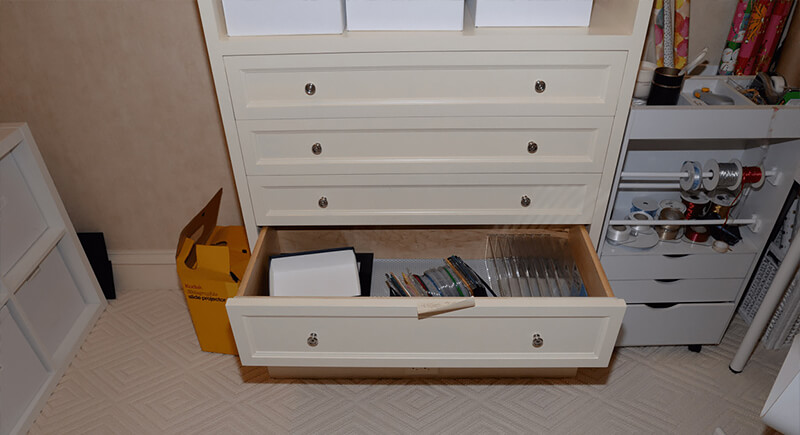
Tape an envelope to the back or underside of the drawer itself, not inside it. Most thieves check what is visible and move on. They rarely pull drawers all the way out or inspect the underside. The cash stays flat, out of sight, and easy to access without shifting furniture or rummaging through clothes.
Hollowed-Out Book
Credit: Reddit
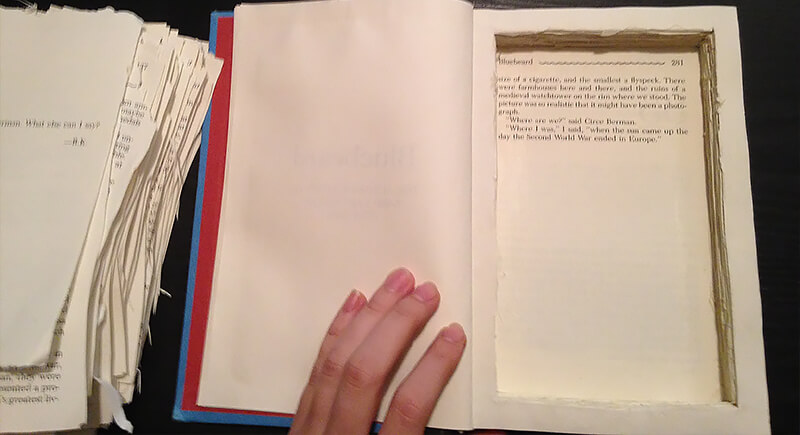
Choose a hardback book you will never reread, then cut a cavity through its pages. Slide cash inside a sealed bag and return it to a full bookshelf. Surrounded by real books, it looks ordinary. This works best in homes where shelves already feel crowded and are rarely casually inspected.
Fake Electrical Outlet
Credit: etsy
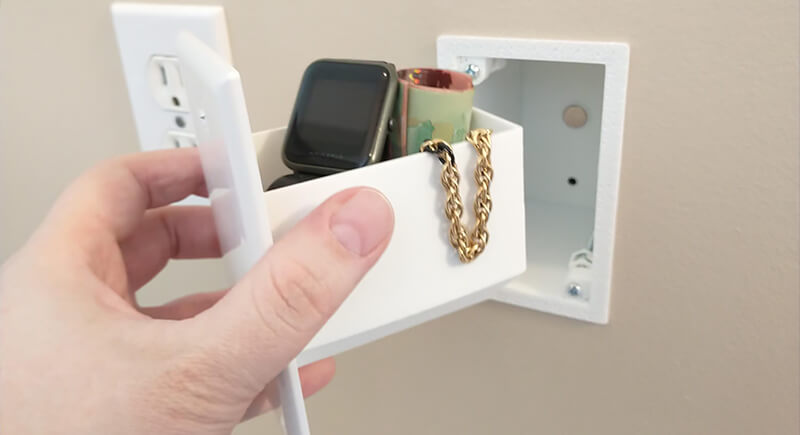
Fake electrical outlets hide small amounts of cash inside the wall itself. Installed correctly, they blend with existing plates and never attract attention. Access is simple, but discovery is unlikely during a rushed search. Match the cover color to the outlets around it so nothing looks slightly off at first glance.
Freezer Food Bag
Credit: Reddit
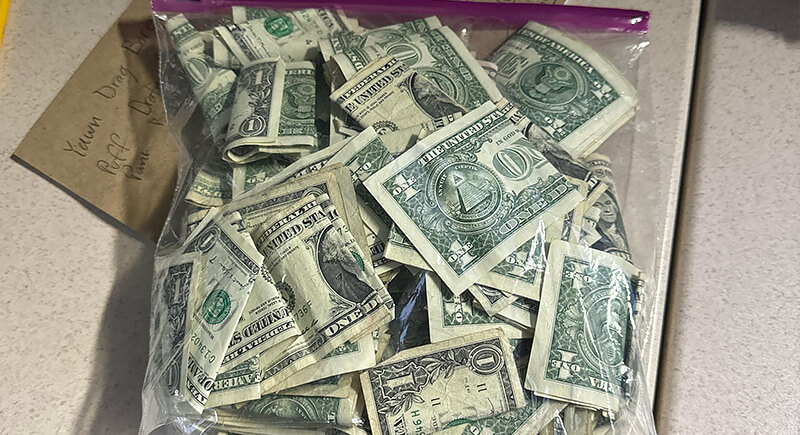
Cash sealed inside a zip bag disappears fast in the freezer. Tuck it into a half-used frozen vegetable bag and push it to the back. No one wants to touch icy food. It feels forgotten, unappealing, and boring, which makes it effective during stressful break-ins and hurried searches by strangers.
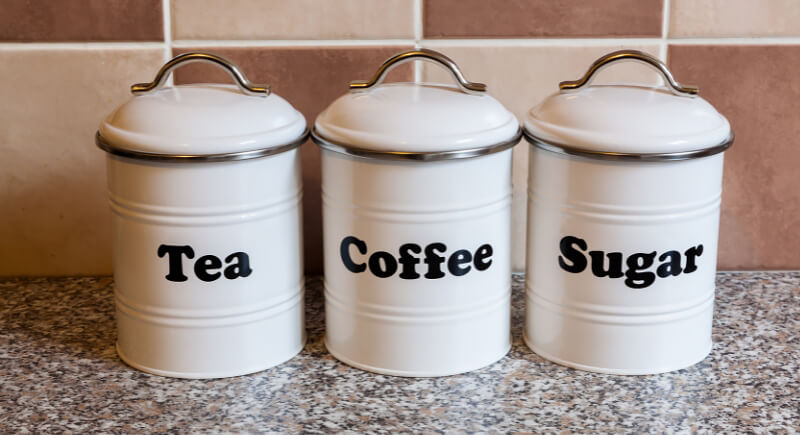
Flour or Sugar Canister
Credit: Getty Images
Pantry containers make excellent hiding spots because no one empties them during a search. Place cash in a sealed bag at the bottom, then pour flour or sugar on top. Access takes effort, but discovery is unlikely unless someone plans to bake mid-burglary, with curiosity or patience under pressure.
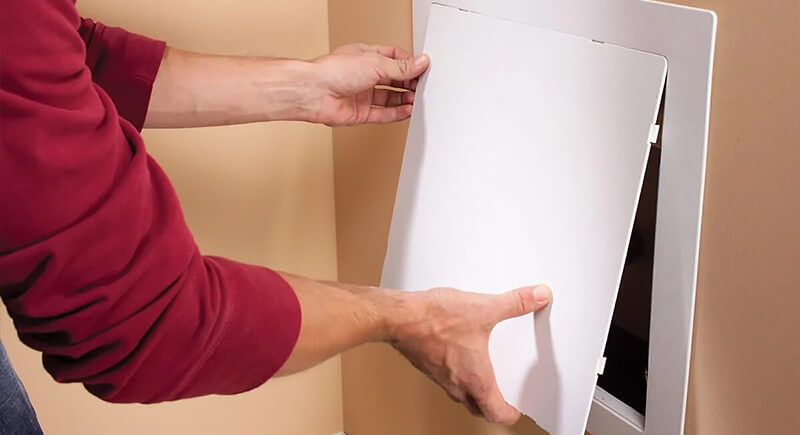
Plumbing Access Panel
Credit: familyhandyman
Behind the small plumbing access panel near a tub sits unused space. Tape an envelope high on the inside wall or add a shallow shelf. Most people never notice these doors exist. It is discreet, dry, and separate from everyday living areas, rarely drawing attention during indoor theft attempts.
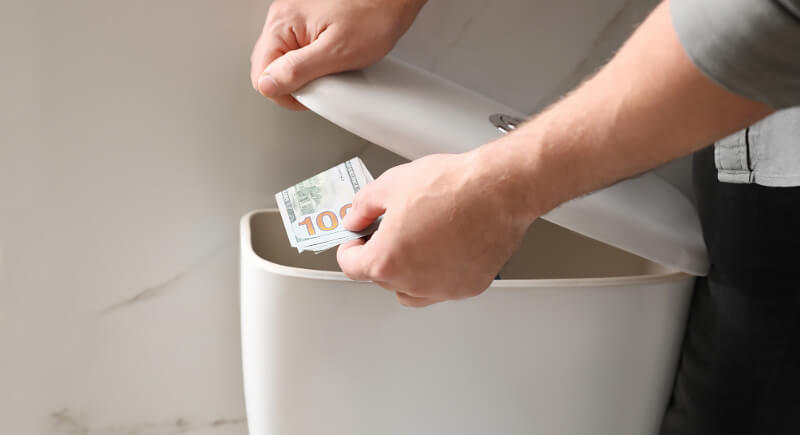
Toilet Tank
Credit: Canva
A sealed jar inside the toilet tank stays hidden in plain sight. Water keeps it out of view, and guests avoid poking around. Access feels private and quick. Just seal everything well to avoid moisture issues, and forget it is there until cash becomes necessary during outages or nearby emergencies.
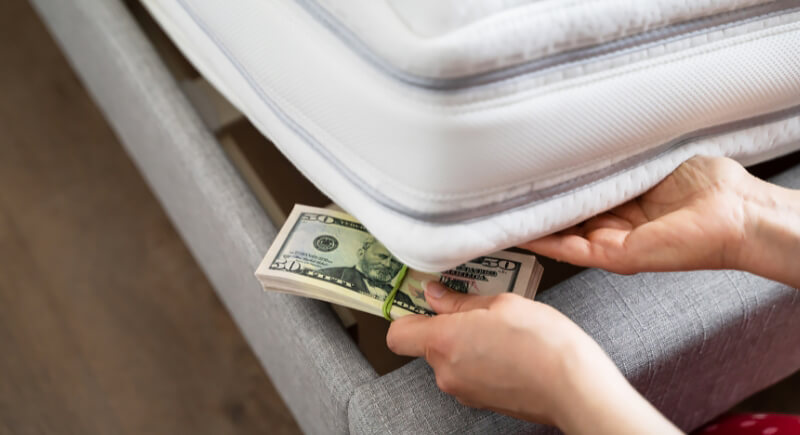
Under Furniture Frame
Credit: Getty Images
The wooden frame under a couch or chair offers quiet storage. Tape cash inside a plastic sleeve so hands cannot easily reach it. Furniture rarely gets flipped during quick thefts. This spot stays accessible while remaining out of normal sight lines and avoids the drawers people instinctively open first during searches.
False Drawer Front
Credit: Reddit
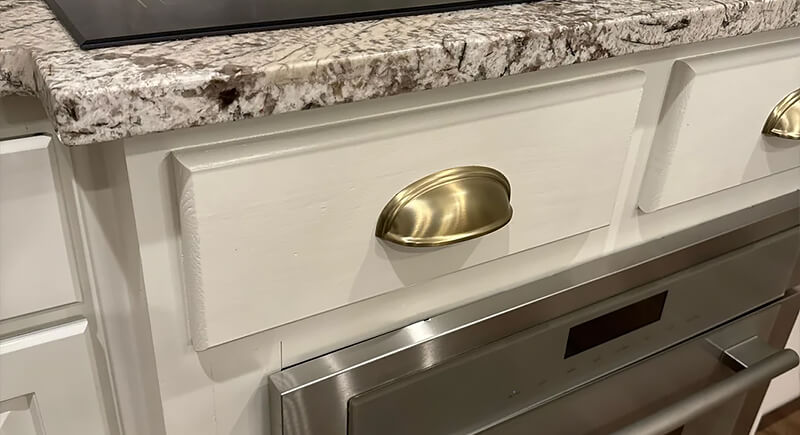
Many cabinets include a fake top drawer that hides empty space. That gap works perfectly for flat cash envelopes. Since the drawer never opens, it avoids attention. Access is simple once you know the trick, and visitors never notice it during inspections or rushed searches in unfamiliar kitchens.
Unused Appliance
Credit: iStockphoto
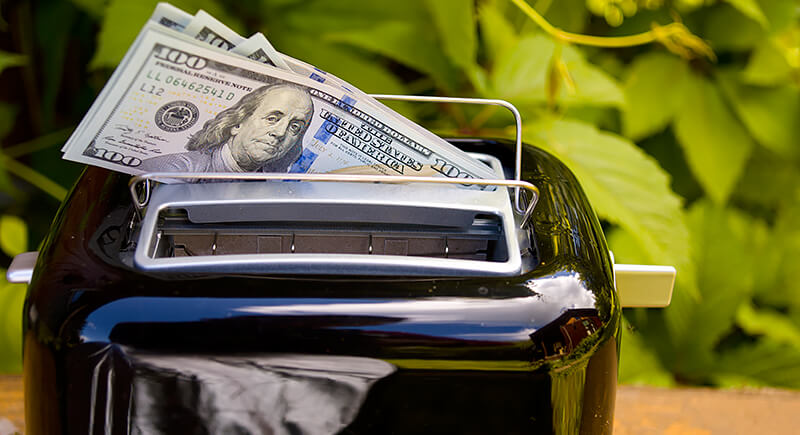
An unused kitchen appliance tucked into a cabinet makes a dull hiding place. Remove the base, seal the cash, and return it to storage. Skip anything valuable. Boring items blend in and remain untouched as attention focuses on obvious targets during hurried searches by strangers in unfamiliar homes at night.