Ancient Tech We Still Can’t Replicate Today
We can split atoms, map the human genome, and launch cars into space. Still, there are objects built hundreds or even thousands of years ago that we struggle to fully understand, let alone recreate. As basic as some of these items may seem, they are revered enough to be displayed in museums, resilient enough to stand in real cities, and elusive enough to elude attempts to revive them. Here are ten of the most fascinating ancient inventions that humans have barely reproduced.
Greek Fire

Credit: Wikipedia
Greek fire was the Byzantine Empire’s most feared weapon. It burned even on water, stuck to ships and skin, and could not be put out by throwing water on it. Launched through bronze siphons on warships from the 7th century onward, it gave Byzantium a naval edge. When Constantinople fell in 1453, the secret formula disappeared, and it has never been recovered.
Roman Concrete
Credit: Wikimedia Commons
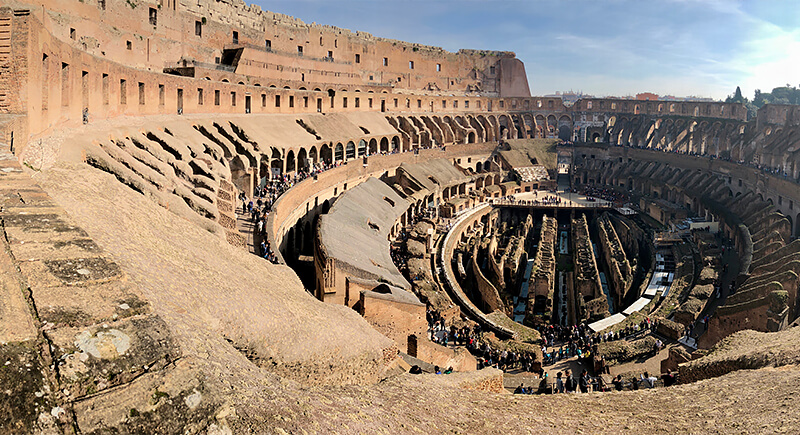
Some Roman harbor structures have stood for nearly 2,000 years, even as parts of modern concrete can weaken within decades. Researchers from MIT and Harvard found that Roman builders used a mixture that reacts with seawater, allowing cracks to seal over time. Scientists have reproduced this self-healing reaction in the laboratory, but using it consistently on a large industrial scale remains uncommon today.
The Lycurgus Cup
Credit: Youtube
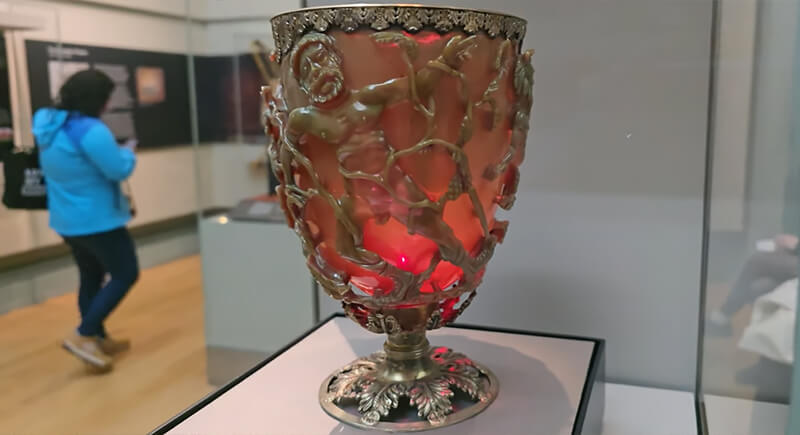
If you hold this 4th-century Roman glass in ordinary light, it looks green. But when you shine a light through it, it turns blood red. Researchers discovered the glass contains gold and silver nanoparticles. Those particles shift which wavelengths of light get absorbed or reflected. Today, the effect has been reproduced after extensive laboratory work, but imagining Roman craftsmen achieved that level of dispersion by hand is mind-boggling.
The Antikythera Mechanism
Credit: Wikimedia Commons
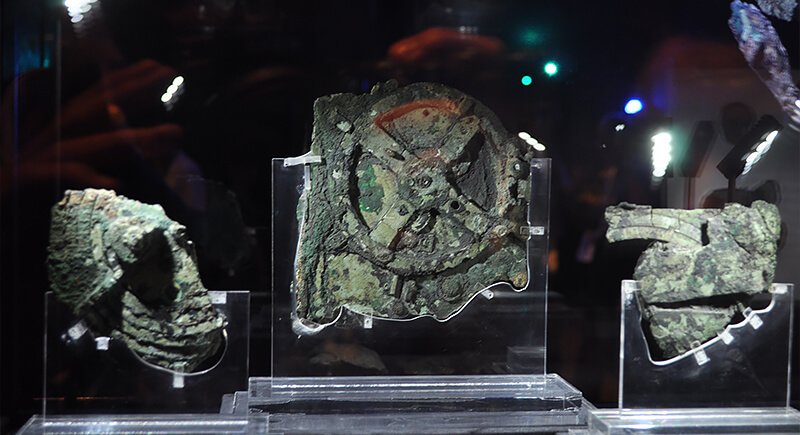
In 1901, divers exploring a 2,000-year-old Greek shipwreck pulled up what looked like a corroded lump of bronze. Once studied, it revealed dozens of tiny interlocking gears. It turned out to be a hand-cranked device that could predict eclipses, track planetary movements, and even calculate Olympic dates. In 2021, a team at University College London created a digital model, yet how ancient craftsmen built it with such precision remains the real mystery.
Inca Polygonal Masonry
Credit: Wikimedia Commons
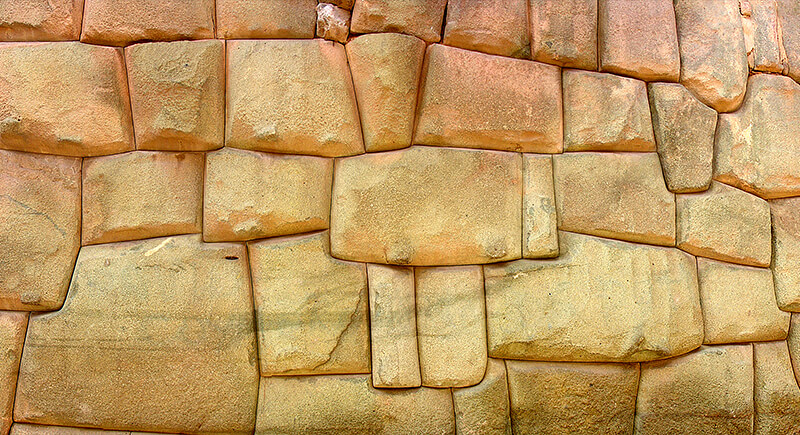
The walls at Sacsayhuamán in Peru contain stones weighing several tons, cut into irregular shapes. Yet, the walls interlock without mortar and have some millimeter-thin joints. These walls survived earthquakes, such as the one on March 31, 1650, that affected nearby Spanish colonial buildings. Archaeologists can only speculate about how the Inca achieved this feat, especially since there are hypotheses of how people can reproduce it today with equivalent tools.
The Iron Pillar of Delhi
Credit: Wikimedia Commons
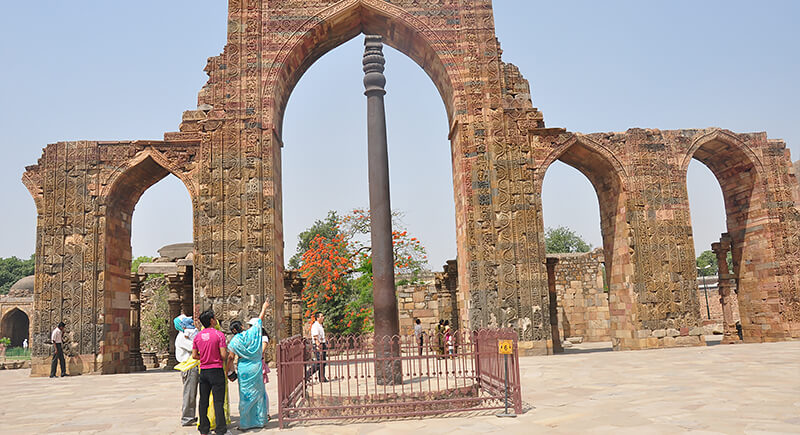
A six-ton iron pillar has stood in the open air in Delhi since around 400 CE with exceptional corrosion resistance, while some modern iron corrodes in years under gentler conditions. Researchers at IIT Kanpur identified the reason. Apparently, the pillar’s iron contains more phosphorus than modern iron. They also used a specific forge-welding process that pushed that phosphorus to the surface, forming a microscopically thin protective layer.
Etruscan Gold Granulation
Credit: Wikimedia Commons
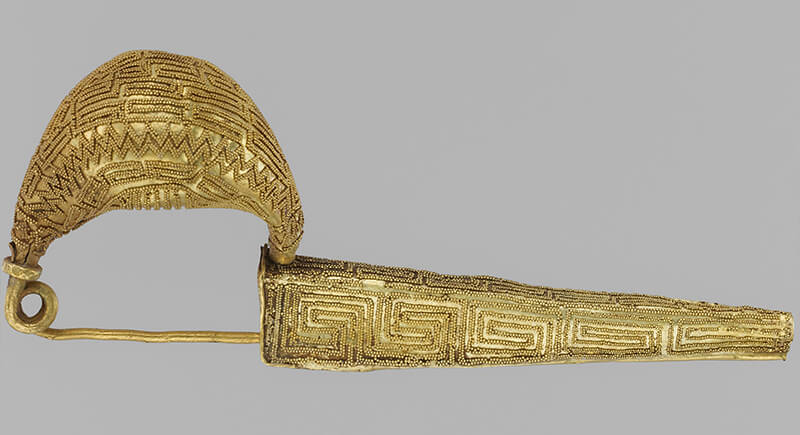
Sometime around 700 BCE, goldsmiths in ancient Etruria learned how to cover jewelry with thousands of gold spheres. Some of these spheres are under a millimeter across, arranged in geometric patterns. There’s a broad understanding of how they attached spheres that small without melting them or warping their surfaces. One unconfirmed theory is that a copper salt compound acts as a low-temperature bonding agent.
Stradivarius Violins
Credit: Wikimedia Commons
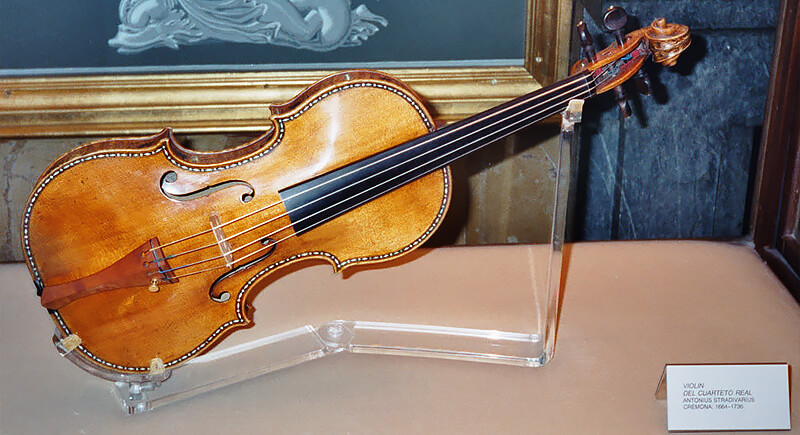
Antonio Stradivari built around 1,100 instruments between 1666 and 1737. Centuries later, studies published in PNAS recorded world-class soloists playing Stradivarius instruments and modern high-quality violins behind a screen. The players couldn’t tell them apart, and most preferred the new ones. A 2017 audience study ended similarly. While modern makers appear to have successfully made good-sounding violins, it seems confusing that elite musicians sometimes disagree.
Zhang Heng’s Seismoscope
Credit: Wikimedia Commons
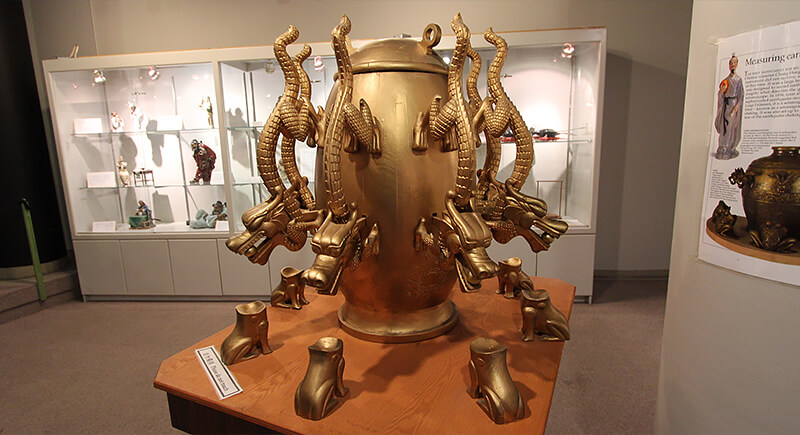
In 132 CE, Chinese engineer Zhang Heng presented the Han court with a bronze urn ringed by eight dragon heads, each holding a bronze ball. When an earthquake struck, one ball dropped into a toad’s mouth below, pointing toward the quake. This machine was the world’s first earthquake detection device. While a 2005 replica built by Chinese seismologists did function, there’s no proof that it matched or differed in sensitivity from the original version.
Nan Madol
Credit: Wikimedia Commons
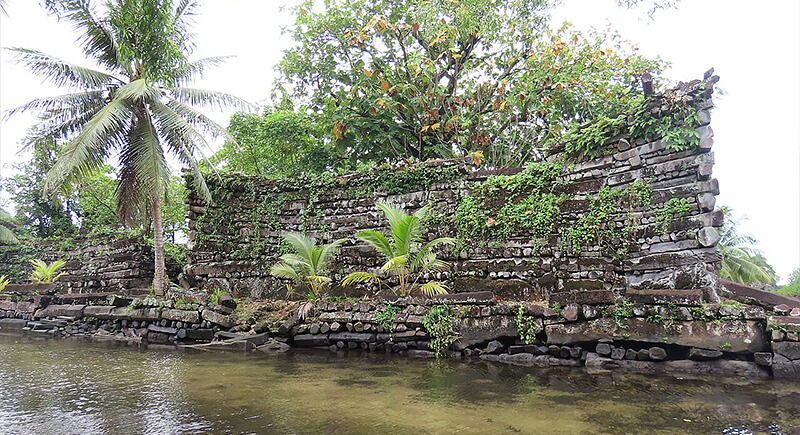
Just off the eastern coast of Pohnpei, this ancient city rises from a coral reef as a network of 92 artificial islands. Builders stacked massive basalt columns, some weighing several tons, using an estimated half a million metric tons of stone. What makes it remarkable is the logistics. There were no metal tools, cranes, or pulleys. The columns had to be moved across open water and placed with precision, and archaeologists still debate exactly how it was done.